How stretch film is made
Cast vs blown stretch film: how are they made and how do they differ?
Written by Öncümak Engineering Team3 min read
In short
Cast and blown stretch film are made from similar polyethylene on different production lines. Cast film is cooled quickly on a chilled roll, which makes it clear and quiet and lets the line run up to about four times faster; blown film is inflated into a bubble and cooled by air, which makes it tougher and more resistant to punctures.
All topics
Stretch film basics
- What is stretch film?
- Hand vs machine stretch film: what's the difference?
- What is pre-stretched film?
- What is coreless stretch film?
- PE stretch film vs PVC cling film: what's the difference?
- Is stretch film recyclable?
- Where is slit stretch film used?
- Black and coloured stretch film: what is the colour for?
- Why stretch film tears, breaks or does not cling, and how to fix it
- How to wrap a pallet with stretch film
- How many pallets does a roll of stretch film wrap? Film use and cost per pallet
- Stretch film vs shrink film: what is the difference?
- How to use coreless stretch film: handles, dispensers and wrapping machines
- When is pre-stretched film not the right choice?
- How to measure the pre-stretch on a pallet wrapper
- Stretch hood vs stretch wrap: which one fits your pallets?
- How wrapped pallets are tested: load stability and EUMOS 40509
- Recycled content (PCR) stretch film and plastic packaging taxes
- How to store stretch film: temperature, humidity and shelf life
- One-sided vs two-sided cling stretch film
- UV-resistant stretch film for outdoor storage
- Stretch film for moving house: how to wrap furniture and boxes
- Slit stretch film, strapping or tape: which one for bundling?
- Which width for which product? Slit stretch film rolls and dispensers
Advice & investment
- How to choose a stretch film rewinding machine
- How to calculate stretch film roll length and weight
- Stretch film thickness: what do the microns change?
- How much does a stretch film rewinding machine produce?
- How to start a stretch film rewinding business
- How to choose jumbo rolls for stretch film rewinding
- What determines the price of stretch film?
How stretch film is made
- Polyethylene pellets (mainly LLDPE) and additives are fed into an extruder, melted and pushed through a die.
- The molten film is cooled: on a chilled roll (cast) or as an air-cooled bubble (blown).
- The finished film is wound onto large jumbo rolls.
- The jumbo rolls go to rewinding machines, which turn them into rolls ready for sale.
The cooling step is where cast and blown film part ways, and it shapes almost everything about how the film behaves.
Cast film
In the cast process the melt leaves a flat die as a thin curtain and lands on a polished, water-cooled chill roll. It cools very quickly, which lets a cast line produce up to about four times faster than a blown line. Stretch film is often co-extruded in several thin layers at once, so each layer can be designed for a job: cling on the outside, strength in the middle.
Advantages
- Very clear and glossy
- Quiet when unwound
- Higher production speed and capacity
- Easier to set up for even thickness
- Resists tears spreading through the film
Disadvantages
- Less puncture resistance than blown film
Blown film
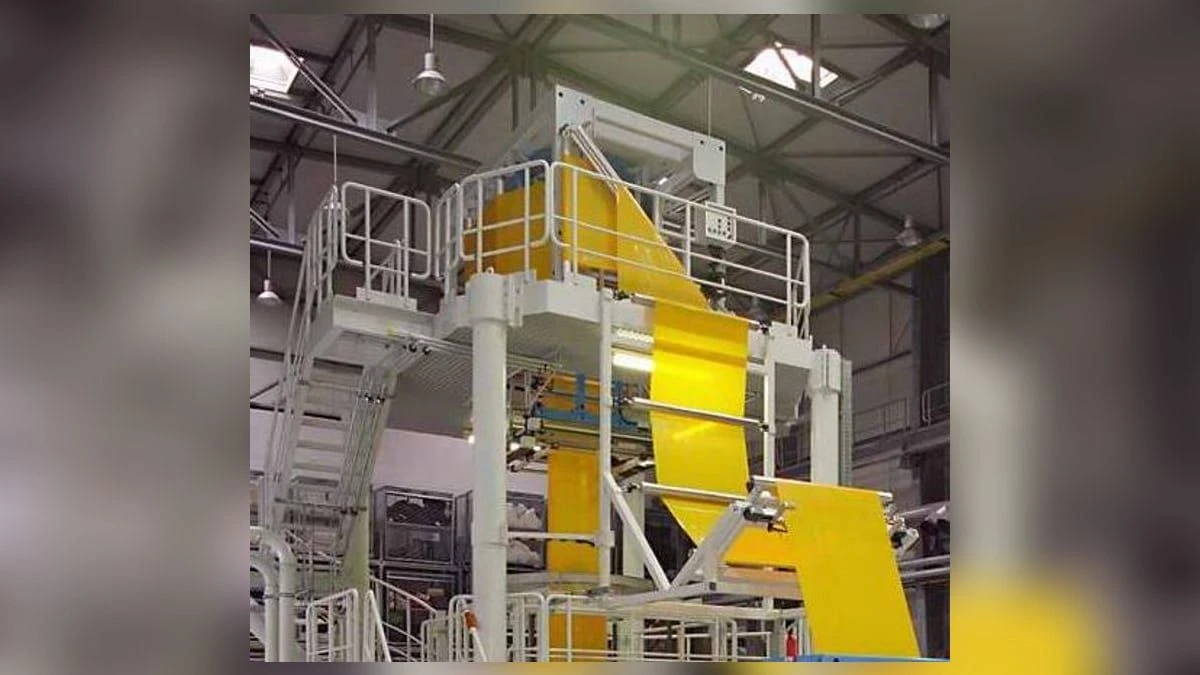
In the blown process the melt leaves a round die as a tube, which is inflated with air into a tall bubble and cooled slowly on its way up. It is then flattened and wound. The bubble stretches the film in two directions, and the slow cooling makes it less clear than cast film.
Advantages
- Very good puncture resistance and toughness
- Higher cling
- Preferred for heavy loads such as pulp, paper and timber
Disadvantages
- Hazier, so labels are harder to read
- Louder when unwound
- Lower production speed
- More sensitive to the production environment, so harder to set up for even thickness
Side-by-side comparison
| Property | Cast film | Blown film |
|---|---|---|
| Clarity | Very high | Lower, slightly hazy |
| Noise when unwinding | Quiet | Louder |
| Puncture resistance | Good | Very good |
| Resistance to tears spreading | Better | Lower |
| Cling | Good | Higher |
| Production speed | Up to about 4 times higher | Lower |
| Thickness evenness | Almost the same with good settings; easier to set up | Almost the same with good settings; more sensitive to the surroundings |
| Typical use | Most hand and machine pallet film (an industry estimate puts cast at 70–80% of all stretch film) | Heavy loads such as pulp, paper and timber |
Neither film is better in every case; each has its advantages. If the load does not need blown film's puncture resistance and toughness, cast film is usually the more economical choice. For even thickness, the quality of the line and the know-how of its operators matter more than the process itself.
Does it matter for rewinding?
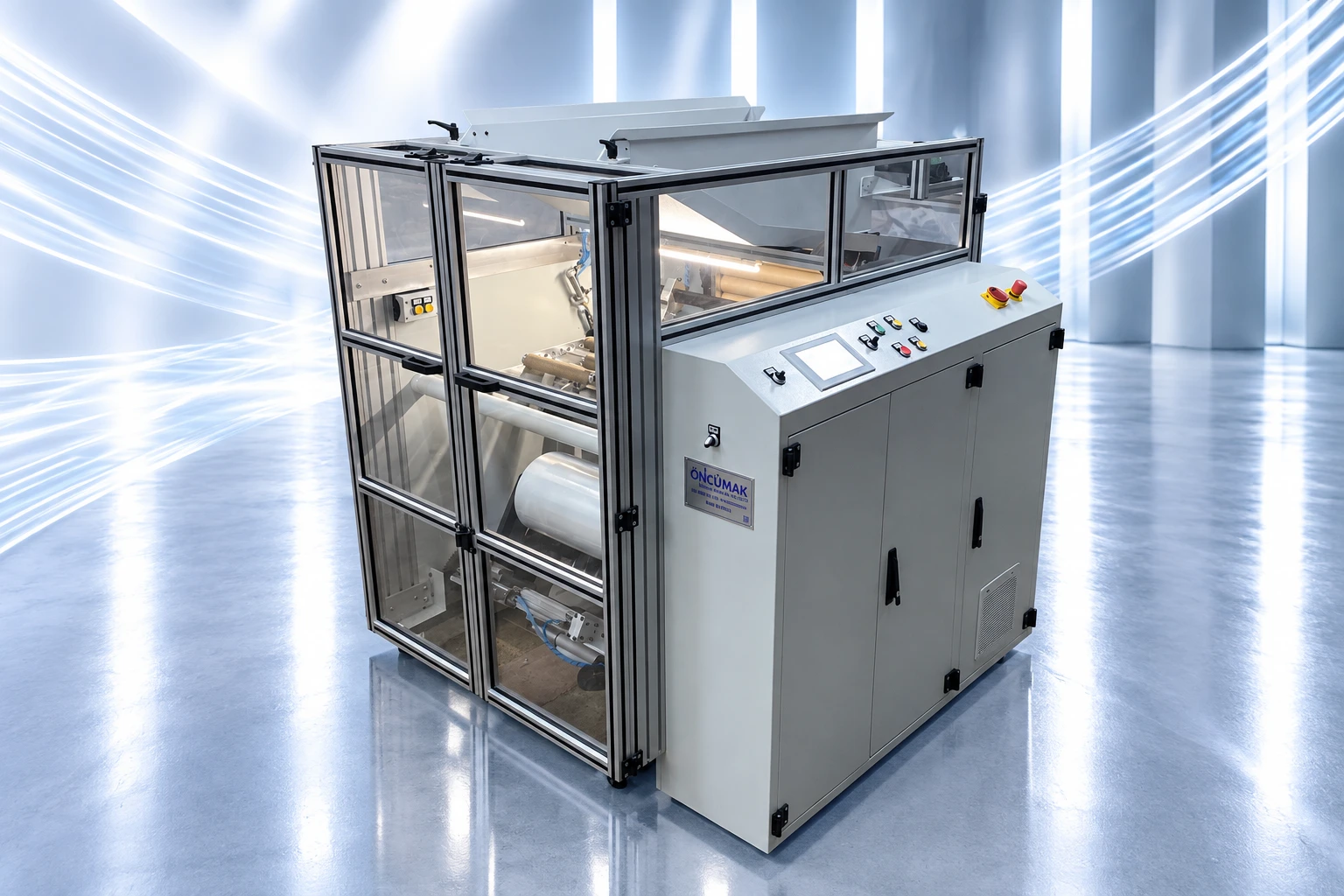
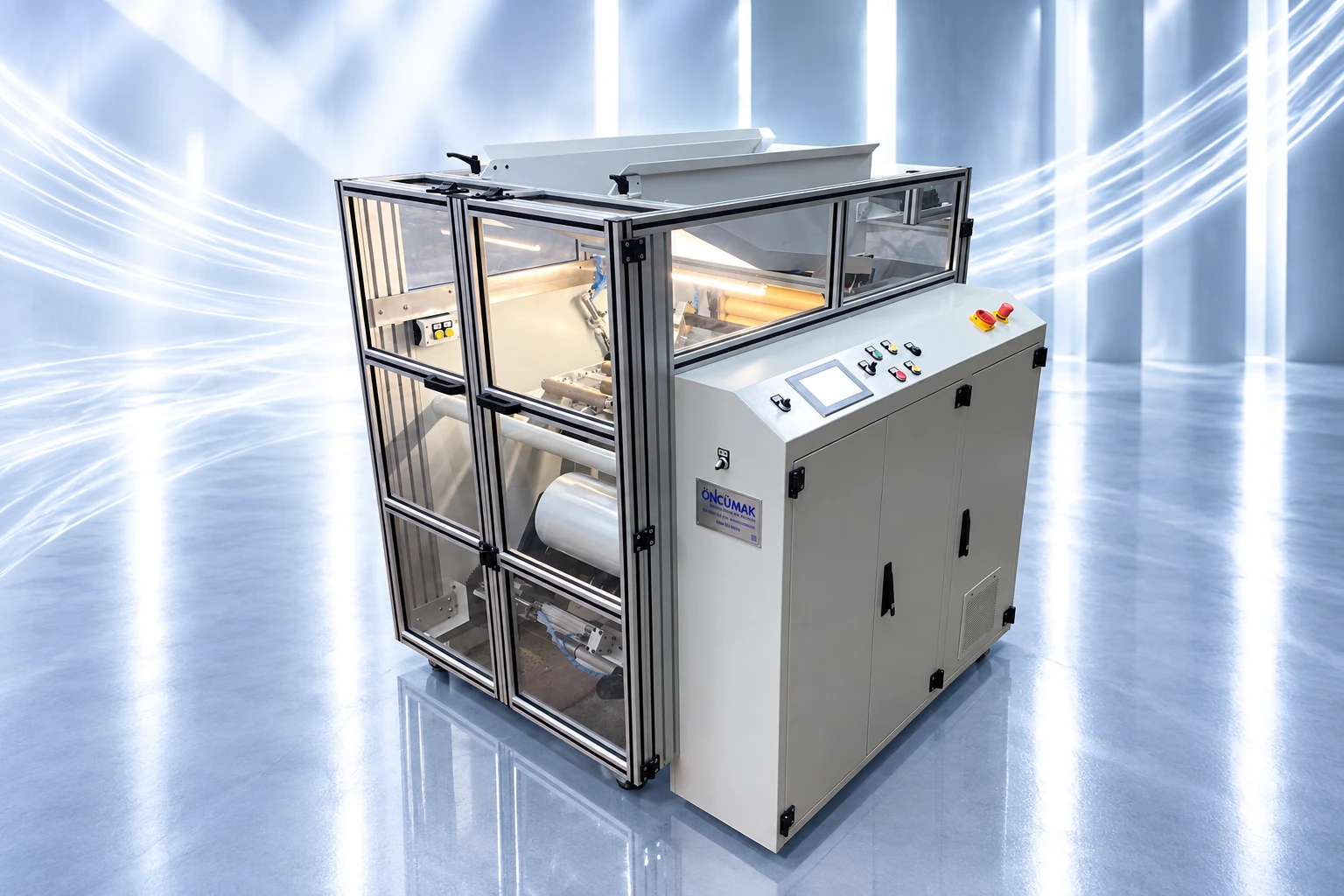
Both cast and blown jumbo rolls can be rewound. What changes from one jumbo roll to the next, even from the same producer, is the cling and the way the film reacts to tension. Machines that control unwinding and rewinding with separate servo motors, such as the SM-1300 2S and SM-1300 2S PRO, let the operator adjust film tension precisely from the touchscreen, which makes them well suited to jumbo rolls with varying cling.
Sources(2)
- Seibert, A., Lantech (2026). Blown vs. Cast: How is stretch film made?
- AAA Polymer. Cast vs Blown Stretch Wrap: The Differences and Benefits of Each