Advice & investment
Stretch film thickness: what do the microns change?
Written by Öncümak Engineering Team2 min read
In short
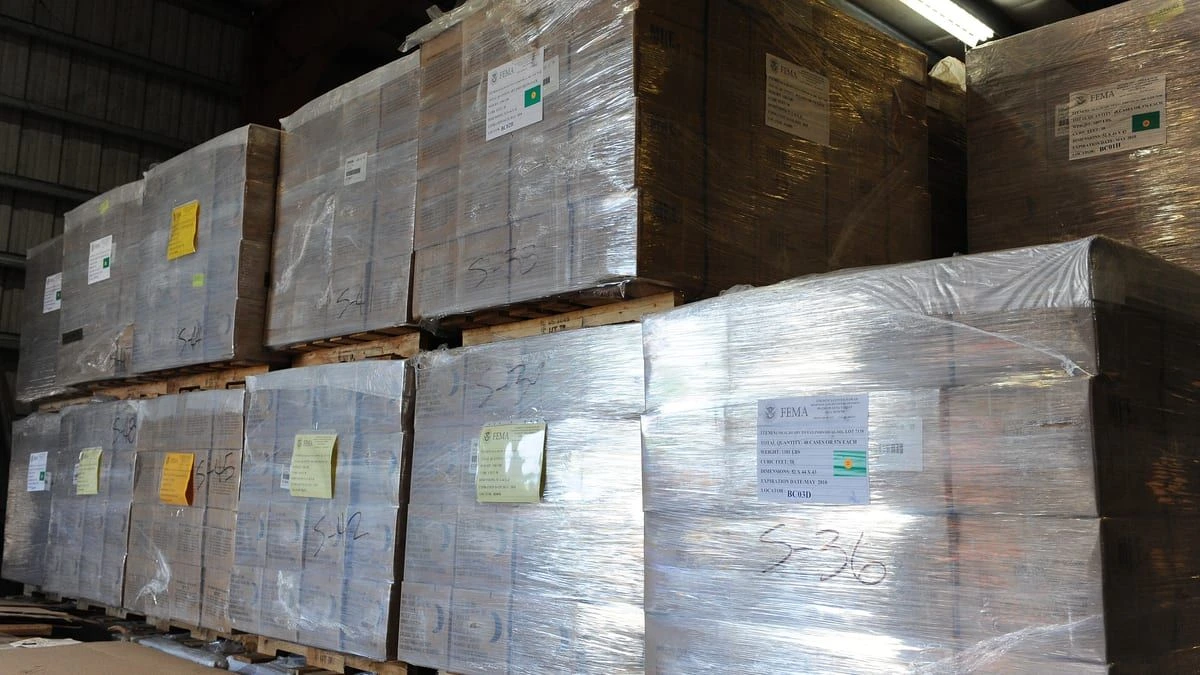
Thickness decides how many metres of film you get per kilo, how well the film resists punctures and what it costs per pallet, but it does not decide on its own how well a load is held. Film quality and how far the film is stretched matter just as much.
All topics
Stretch film basics
- What is stretch film?
- Hand vs machine stretch film: what's the difference?
- What is pre-stretched film?
- What is coreless stretch film?
- PE stretch film vs PVC cling film: what's the difference?
- Is stretch film recyclable?
- Where is slit stretch film used?
- Black and coloured stretch film: what is the colour for?
- Why stretch film tears, breaks or does not cling, and how to fix it
- How to wrap a pallet with stretch film
- How many pallets does a roll of stretch film wrap? Film use and cost per pallet
- Stretch film vs shrink film: what is the difference?
- How to use coreless stretch film: handles, dispensers and wrapping machines
- When is pre-stretched film not the right choice?
- How to measure the pre-stretch on a pallet wrapper
- Stretch hood vs stretch wrap: which one fits your pallets?
- How wrapped pallets are tested: load stability and EUMOS 40509
- Recycled content (PCR) stretch film and plastic packaging taxes
- How to store stretch film: temperature, humidity and shelf life
- One-sided vs two-sided cling stretch film
- UV-resistant stretch film for outdoor storage
- Stretch film for moving house: how to wrap furniture and boxes
- Slit stretch film, strapping or tape: which one for bundling?
- Which width for which product? Slit stretch film rolls and dispensers
Advice & investment
- How to choose a stretch film rewinding machine
- How to calculate stretch film roll length and weight
- Stretch film thickness: what do the microns change?
- How much does a stretch film rewinding machine produce?
- How to start a stretch film rewinding business
- How to choose jumbo rolls for stretch film rewinding
- What determines the price of stretch film?
Microns and gauge
Stretch film thickness is given in microns (µm, thousandths of a millimetre); in North America it is often given in gauge, where 80 gauge is about 20 µm. See microns and gauge. Stretch wrap film is typically 10–30 µm thick, according to the European Commission's cargo securing guidelines; pre-stretched films are much thinner.
What thickness changes
| Thinner film | Thicker film | |
|---|---|---|
| Metres per kilo | More | Fewer |
| Cost per metre | Lower | Higher |
| Puncture and tear resistance | Lower | Higher |
| Sharp corners, heavy loads | Needs care and corner protection | Better suited |
| Effort when wrapping by hand | Less | More |
The link between weight and length is direct: at the same density, halving the thickness doubles the length of film in a kilo. The formula is in roll length and weight.
Thicker is not automatically stronger
How well a load is held depends on the force the film applies to it, and that force comes from how far the film is stretched, how many times the load is wrapped and the quality of the film, not from thickness alone. In a 2025 laboratory study of pallet stretch films (Tkaczyk et al., Sensors), the stabilising force rose linearly with the number of wraps, and a thinner 15 µm high-quality film gave the most holding force per gram of film (about 0.31 N/g, against about 0.27 N/g for a standard 23 µm film).
How to choose the thickness
- Load weight and shape: heavy loads and sharp corners call for tougher film, or corner protection.
- Wrapping method: by hand, on a wrapper with powered pre-stretch, or with pre-stretched film?
- The journey: a long road journey with braking, cornering and vibration demands more of the wrapping than moving a pallet across a warehouse.
- Cost per pallet, not per kilo: compare the film used per pallet, not the price per kilo.
Thickness on a rewinding machine
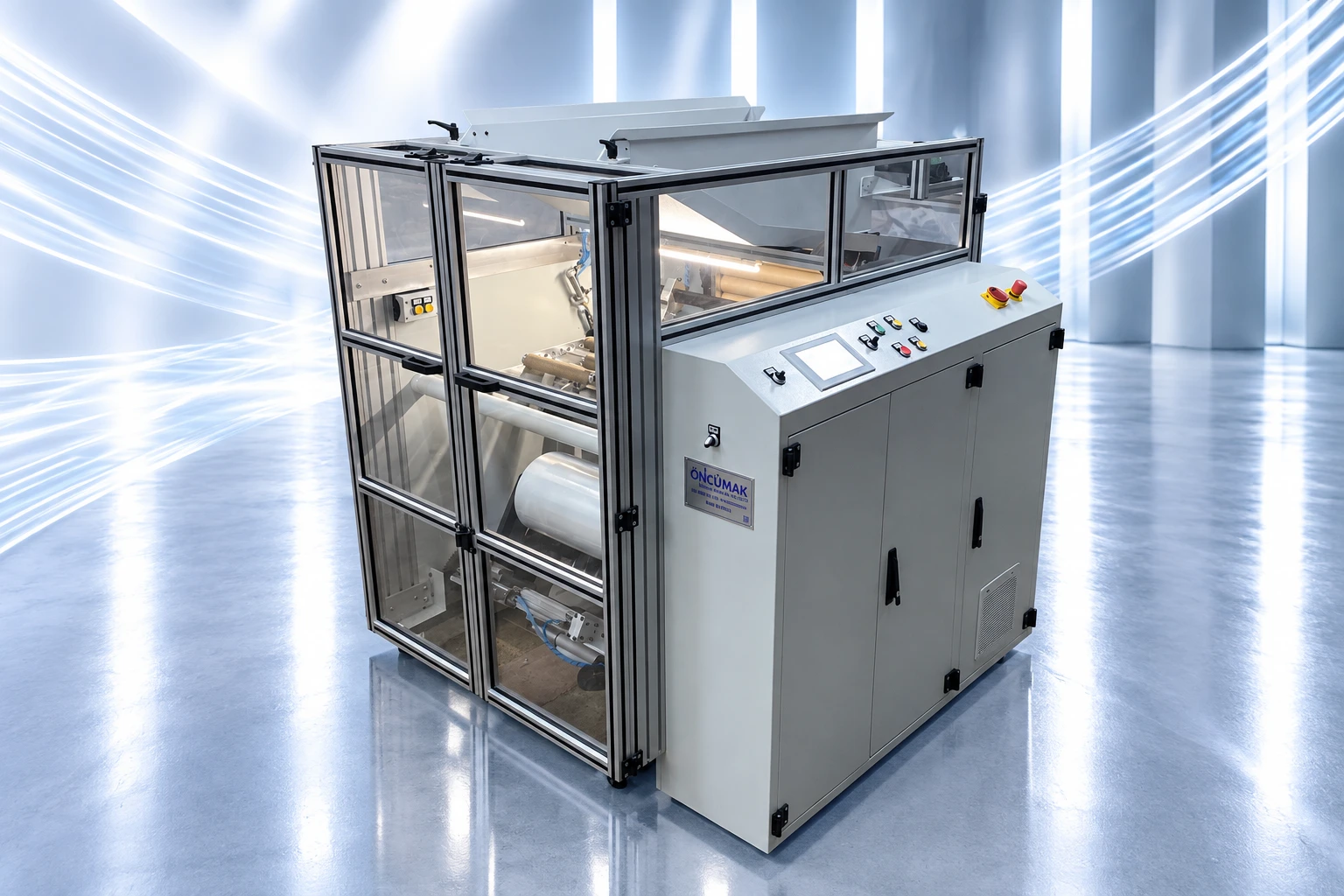
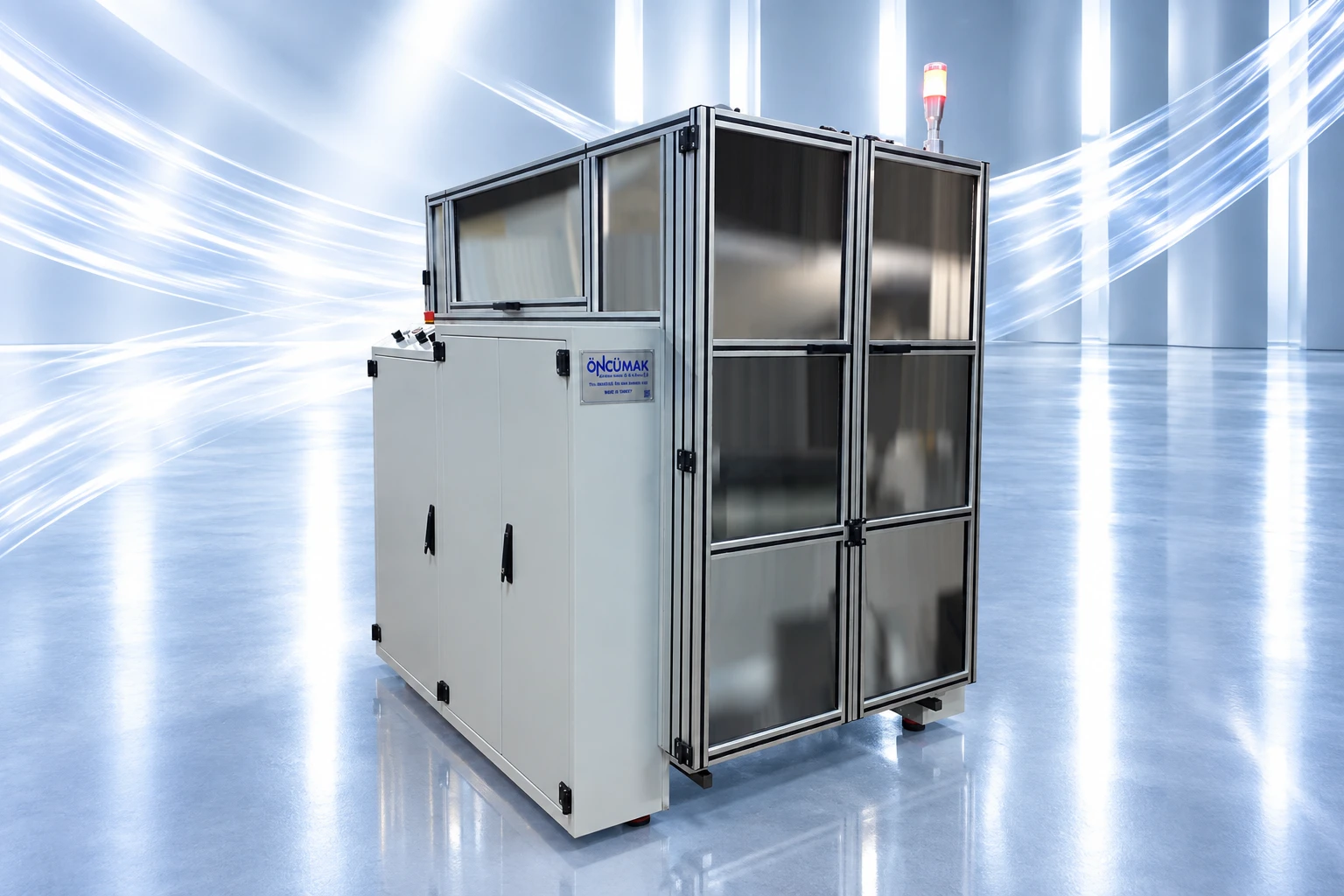
The thinner the film, the more sensitive it is to tension: pulled too hard it stretches or breaks, too gently and the roll winds loosely. Servo tension control helps here: on the SM-1300 2S two servo motors control unwinding and rewinding independently, and the SP-1400 uses three and has produced film as thin as 4 µm in tests. Öncümak's SR-1500, SM-1300 and CR-1700 models process films from 8 to 35 µm.
Sources(4)
- European Commission (2014). European Best Practice Guidelines on Cargo Securing for Road Transport
- Tkaczyk, S., Jagelčák, J., Szpotański, M., Sędrowicz, R. (2025). Pilot Study of Stretch Film for Securing Palletized Loads. Sensors 25(22), 6883.
- AAA Polymer. Stretch film micron vs gauge
- Carepac. Gauge to mil to micron conversion
Related machines
- How to choose a stretch film rewinding machineStart from the rolls you want to sell, not from the machine: the roll type, the widths, your volumes and the jumbo rolls you can buy decide which rewinder fits. Then compare speed, tension control, core sizes and after-sales support, and look at the total cost, not only the price.
- How to calculate stretch film roll length and weightThe net film weight of a roll is length × width × thickness × density. With LLDPE's density of about 0.92 g/cm³, a 50 cm wide, 20 µm film weighs about 9.2 g per metre, so a 300 m hand roll holds about 2.8 kg of film. The formula lets you compare offers and check what you are actually buying.
- How much does a stretch film rewinding machine produce?Theoretical hourly and monthly output of Öncümak's rewinding machines, with every assumption behind the figures, and the factors that make real production higher or lower.
- How to start a stretch film rewinding businessA rewinding business buys jumbo rolls from film producers, rewinds them into the rolls its market buys and sells them under its own name. To start, you need customers who buy a clear set of roll types, a steady supply of jumbo rolls and cores, a rewinding machine that matches those rolls, a 400 V three-phase supply, storage space, trained operators and simple quality checks.
- How to choose jumbo rolls for stretch film rewindingThe jumbo roll decides what your finished rolls can be. First check that its width, weight and thickness fit your machine; then look at cast or blown film, cling, stretch performance and roll quality. Buy to a written specification, inspect every delivery and run a trial before you order in volume.
- What determines the price of stretch film?Stretch film is sold by weight, so the price of a roll comes down to how many kilograms of film it holds and what each kilogram costs. The cost per kilogram depends on the raw material, the film grade and any extras such as colour, UV protection or recycled content; the roll format and the order size add to it. Compare offers by the price per kilogram of net film and by the cost per pallet, not by the price per roll.