Advice & investment
How to start a stretch film rewinding business
Written by Öncümak Engineering Team4 min read
In short
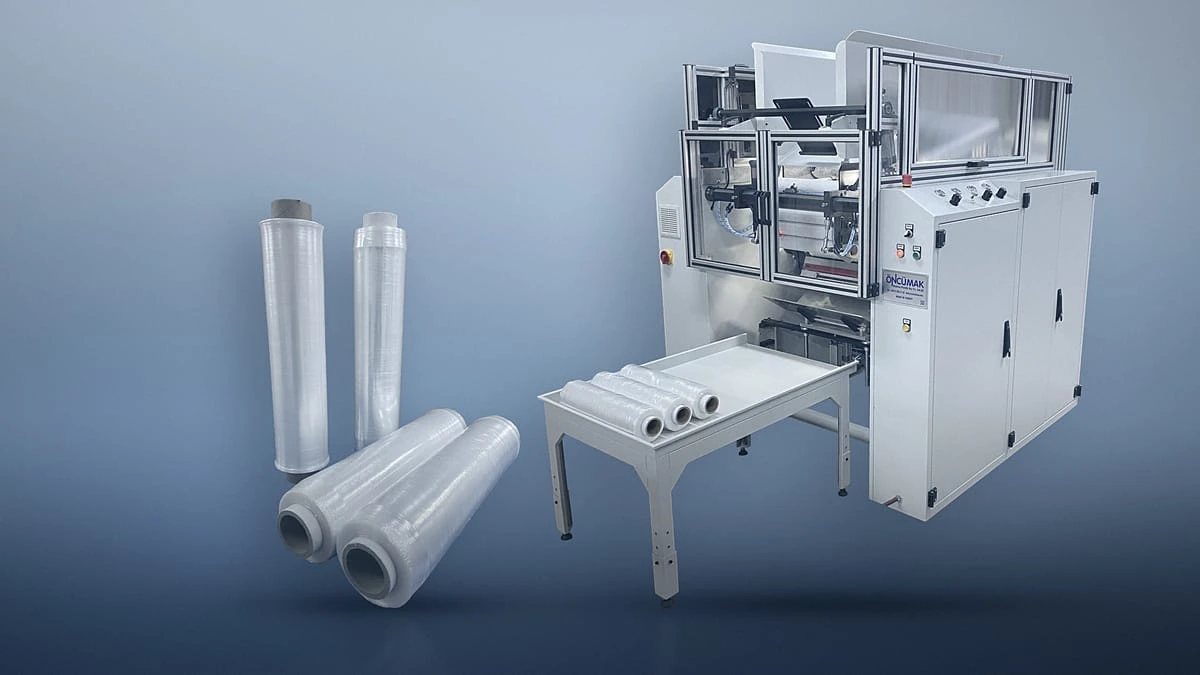
A rewinding business buys jumbo rolls from film producers, rewinds them into the rolls its market buys and sells them under its own name. To start, you need customers who buy a clear set of roll types, a steady supply of jumbo rolls and cores, a rewinding machine that matches those rolls, a 400 V three-phase supply, storage space, trained operators and simple quality checks.
All topics
Stretch film basics
- What is stretch film?
- Hand vs machine stretch film: what's the difference?
- What is pre-stretched film?
- What is coreless stretch film?
- PE stretch film vs PVC cling film: what's the difference?
- Is stretch film recyclable?
- Where is slit stretch film used?
- Black and coloured stretch film: what is the colour for?
- Why stretch film tears, breaks or does not cling, and how to fix it
- How to wrap a pallet with stretch film
- How many pallets does a roll of stretch film wrap? Film use and cost per pallet
- Stretch film vs shrink film: what is the difference?
- How to use coreless stretch film: handles, dispensers and wrapping machines
- When is pre-stretched film not the right choice?
- How to measure the pre-stretch on a pallet wrapper
- Stretch hood vs stretch wrap: which one fits your pallets?
- How wrapped pallets are tested: load stability and EUMOS 40509
- Recycled content (PCR) stretch film and plastic packaging taxes
- How to store stretch film: temperature, humidity and shelf life
- One-sided vs two-sided cling stretch film
- UV-resistant stretch film for outdoor storage
- Stretch film for moving house: how to wrap furniture and boxes
- Slit stretch film, strapping or tape: which one for bundling?
- Which width for which product? Slit stretch film rolls and dispensers
Advice & investment
- How to choose a stretch film rewinding machine
- How to calculate stretch film roll length and weight
- Stretch film thickness: what do the microns change?
- How much does a stretch film rewinding machine produce?
- How to start a stretch film rewinding business
- How to choose jumbo rolls for stretch film rewinding
- What determines the price of stretch film?
What a rewinding business does
Film producers sell stretch film on jumbo rolls: large master rolls that end users cannot handle. A rewinding business sits between the producer and the user. It buys jumbo rolls, rewinds them into hand rolls, machine rolls, pre-stretched, coreless or slit rolls, and sells them in the lengths, weights and brands its customers want. This is also known as private label stretch film production: the business can sell the same film under its own brand or under its customer's brand and label.
The value it adds is the right format, at the right time: a producer sells a few standard jumbo rolls, while a packaging wholesaler, a factory or a logistics centre wants a specific roll, often at short notice. See what a stretch film rewinding machine is.
1. Start from your market
Decide what you will sell before you decide anything else:
- Hand rolls: usually 50 cm wide, about 2–3 kg and 200–300 m long, for warehouses, shops and small producers.
- Consumer rolls: narrower and shorter rolls for moving, storage and household use.
- Machine rolls: longer, heavier rolls that must fit your customers' pallet wrapping machines.
- Special rolls: pre-stretched, coreless, slit or coloured rolls, which help you stand out.
Talk to your first customers early: which widths, lengths, thicknesses and core sizes they buy, how many rolls a month, and what they pay. Buyers who know the trade compare offers by the price per kilogram of net film, so learn to calculate roll length and weight.
2. Secure your materials
- Jumbo rolls: work with at least two suppliers so that one late delivery does not stop production, and buy to a written specification. See how to choose jumbo rolls.
- Cores: paper cores (usually 38, 50 or 76 mm inner diameter) are bought from a core supplier, already cut to the width of your rolls. For slit rolls you need cores in each narrow width. Coreless rolls need no cores at all.
- Packaging: boxes or cartons, labels and pallets for shipping your finished rolls.
3. Choose the machine
The rolls you sell decide the machine. The step-by-step guide is in how to choose a stretch film rewinding machine; in short:
| If you start with… | Consider |
|---|---|
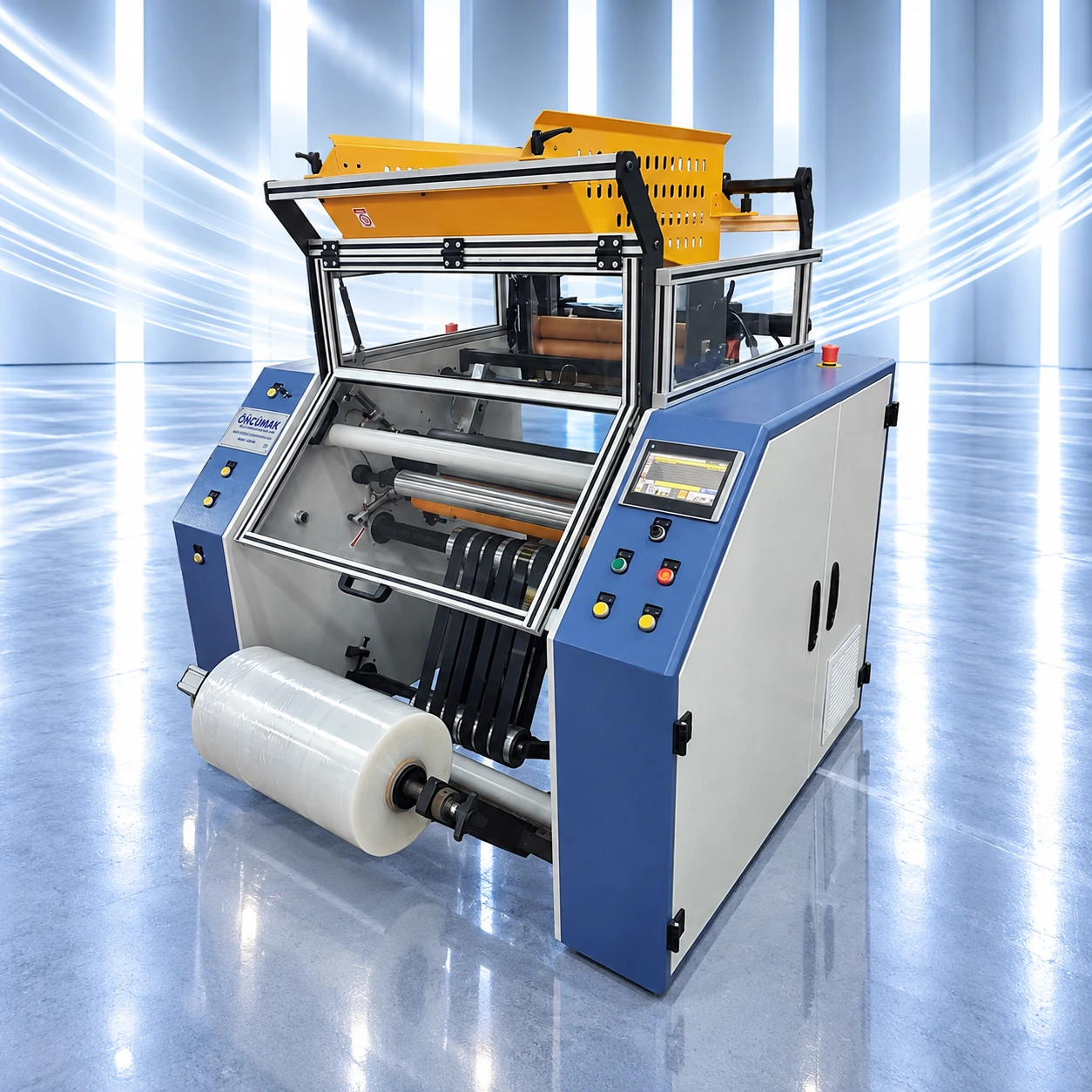
| Standard hand and machine rolls, PVC cling film | SR-1500 |
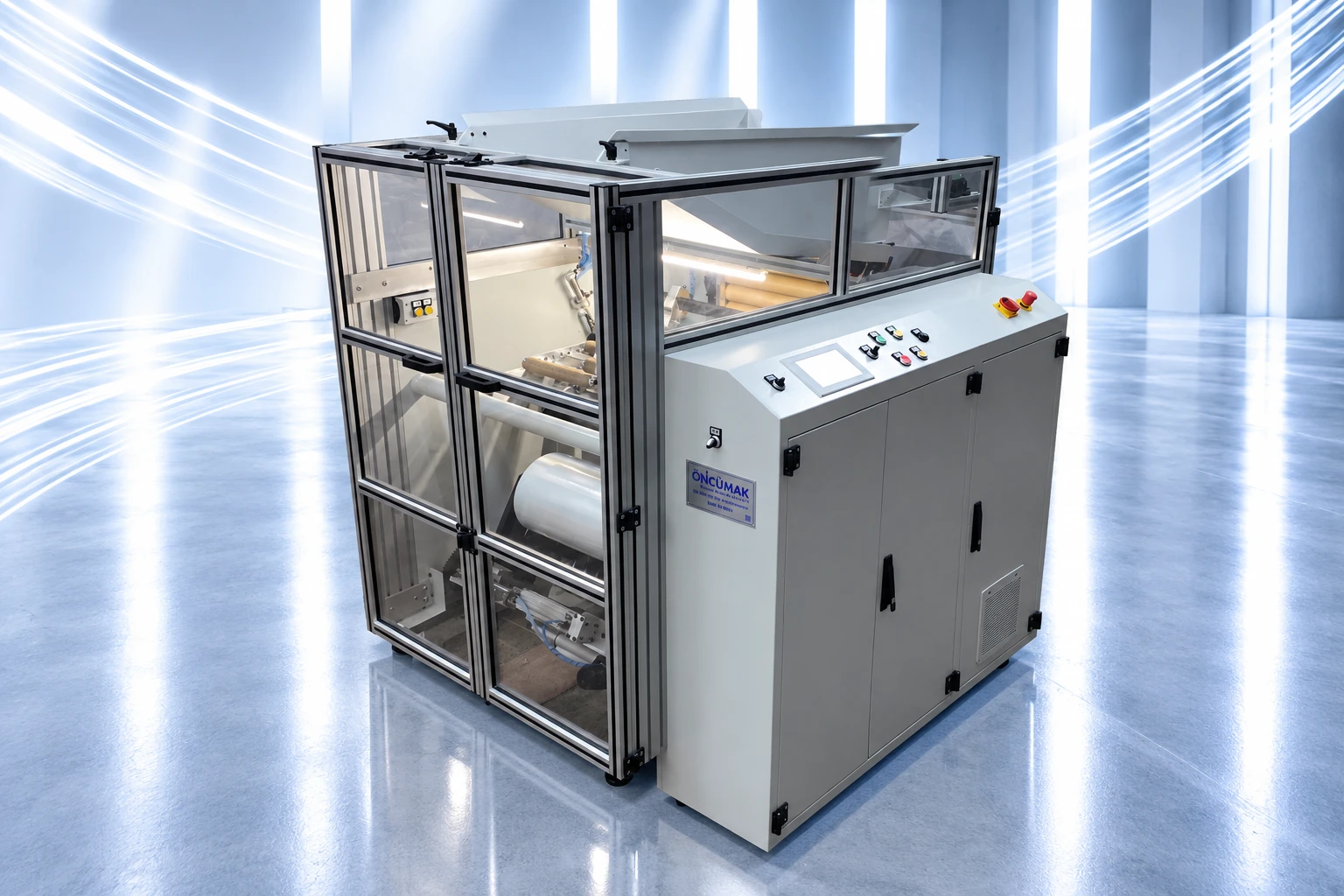
| Several widths from one jumbo roll, as well as full-width rolls | SM-1300 L |
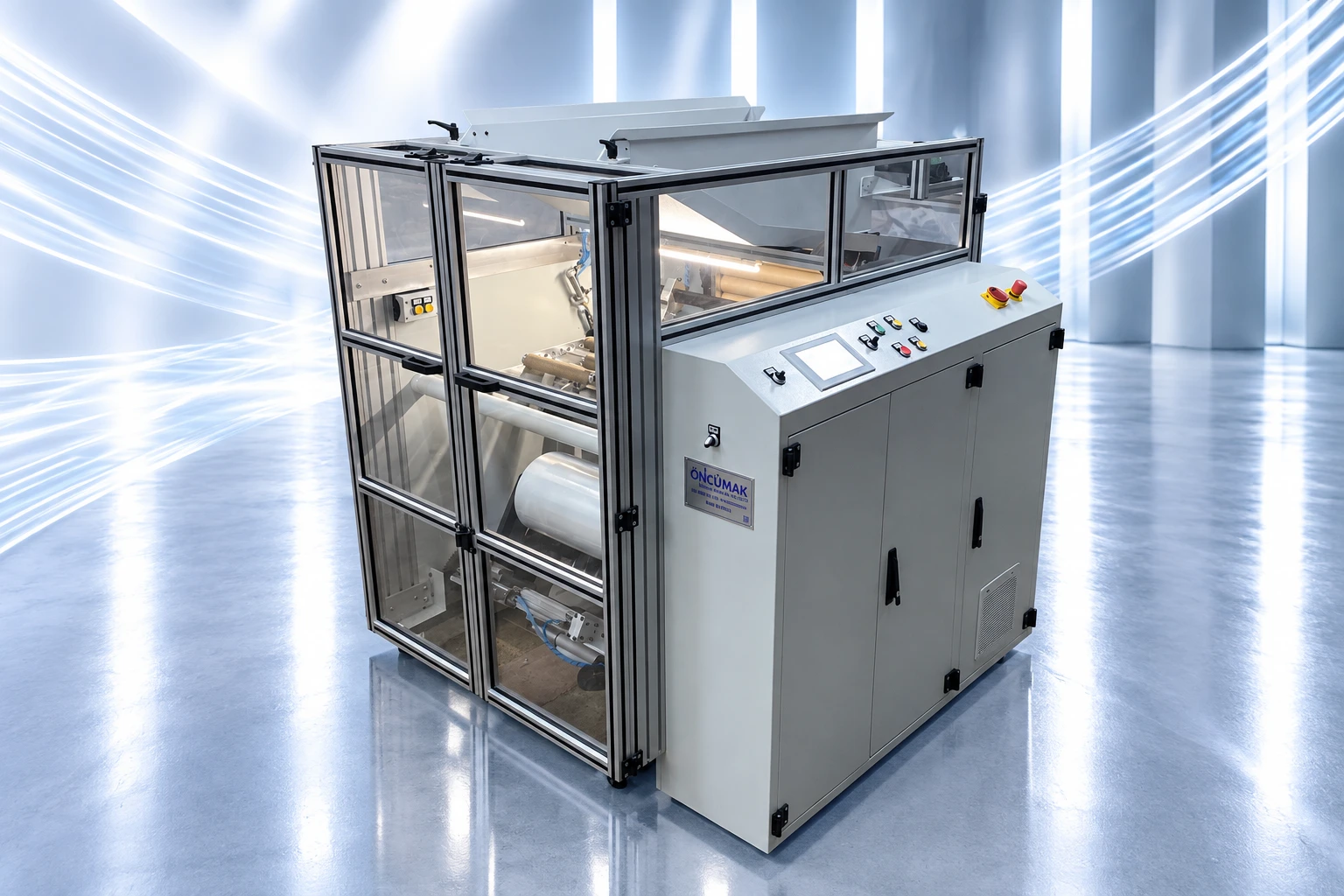
| Jumbo rolls from several sources, precise tension | SM-1300 2S |
| Pre-stretched film | SP-1400 |
| Coreless rolls | CR-1700 |
All Öncümak rewinders are fully automatic, and one operator can run two machines at the same time. See semi-automatic vs fully automatic rewinders for why that matters for your costs.
4. Space, power and people
- Power: a 400 V, 50 Hz three-phase supply.
- Space: room for the machine and its operator, jumbo roll storage, finished-goods storage and a packing area, with a clear route for a pallet truck or forklift.
- Storage conditions: film makers typically recommend storing stretch film indoors, out of direct sunlight, at about 10–30 °C. Film that is too cold or too warm behaves differently on the machine and on the pallet.
- People: operators who load jumbo rolls and cores, take off and pack finished rolls and check quality. Öncümak installs the machine at your site on request and trains your operators.
5. Build in quality from day one
- Length: the machine's length counter sets every roll to the metre; check it regularly.
- Weight: weigh sample rolls, subtract the core and compare with the length, width and thickness on your label. The formula is in roll length and weight.
- Edges and winding: finished rolls should have clean, even edges and keep their shape.
- Honest labels: a roll that is shorter or thinner than stated loses a customer quickly.
6. Work out the numbers
List every cost before you set a price:
- jumbo rolls (per kilogram), cores and packaging;
- labour and energy;
- film waste at start-up and roll changes;
- machine investment, maintenance and spare parts;
- storage and delivery.
Then estimate how much you can produce. How much a stretch film rewinding machine produces gives theoretical hourly and monthly output for each Öncümak model and explains what makes real output higher or lower.
7. Check the packaging rules
Selling packaging comes with obligations. In Türkiye, companies that place packaging on the market register in the Packaging Information System under the Packaging Waste Control Regulation; in the EU, the Packaging and Packaging Waste Regulation applies. See what the rules say, and check the details with an advisor.
Sources(3)
- Regulation (EU) 2025/40 on packaging and packaging waste. EUR-Lex
- Ambalaj Atıklarının Kontrolü Yönetmeliği, Resmî Gazete, 26.06.2021, No. 31523. Resmî Gazete
- Polifilm. FAQs about stretch films
Related machines
 SR-1500Conventional Stretch Film RewindingView machine
  SM-1300 LStretch Film Rewinder & SlitterView machine
  SM-1300 2SDual-Servo Stretch Film Rewinder & SlitterView machine
 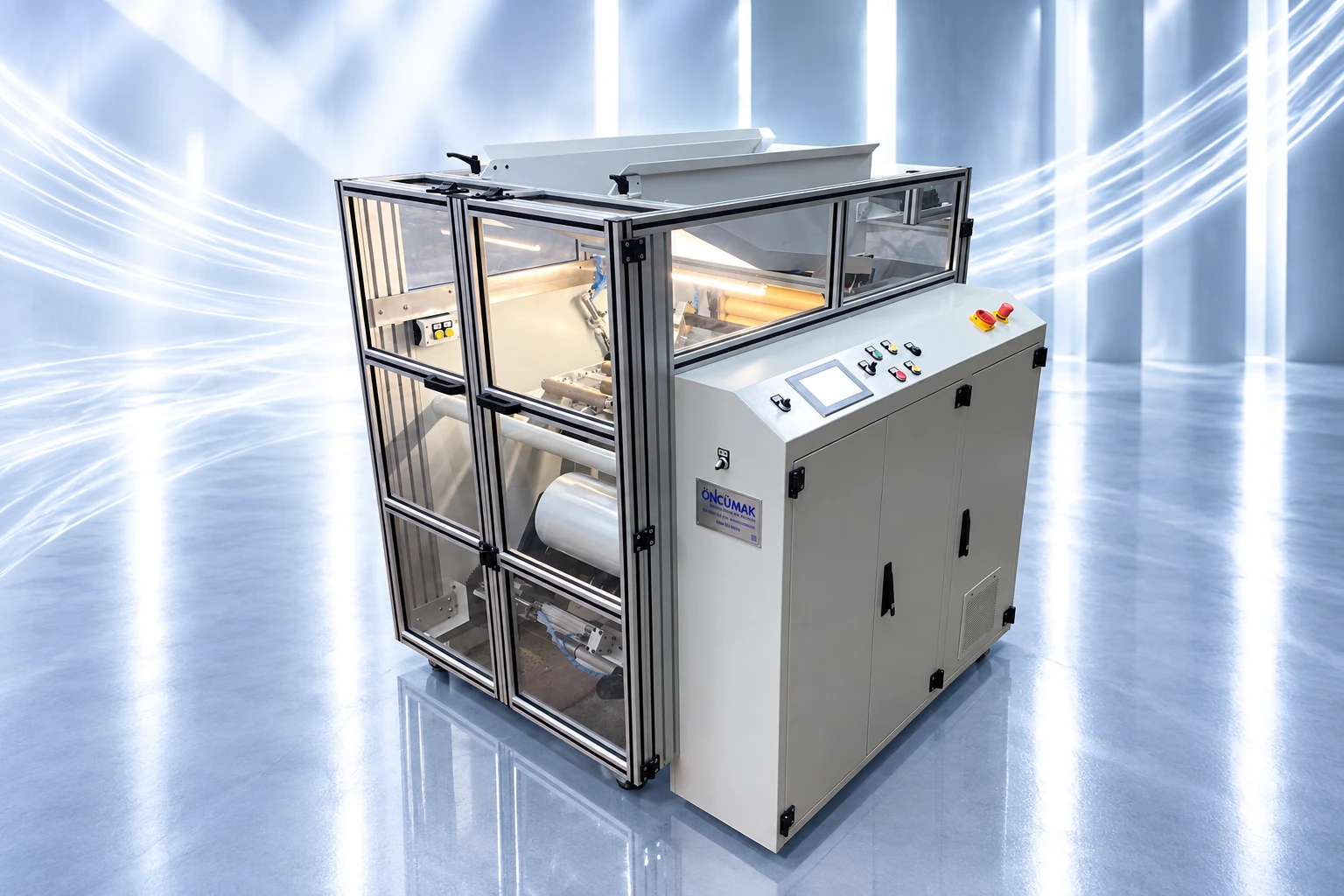 SM-1300 2S PROHigh-Performance Dual-Servo Stretch Film SlitterView machine
 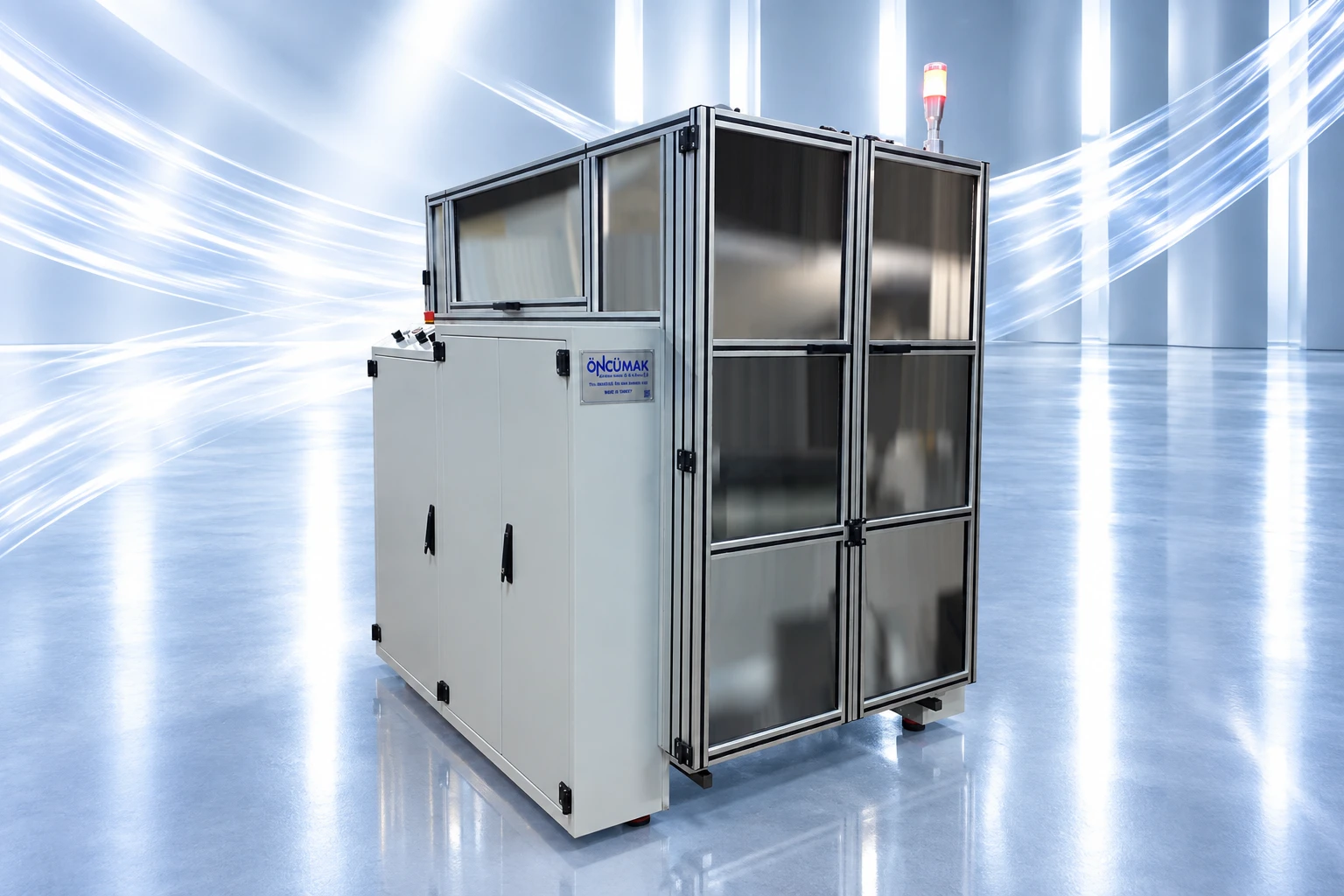 SP-1400Pre-Stretch Film RewinderView machine
 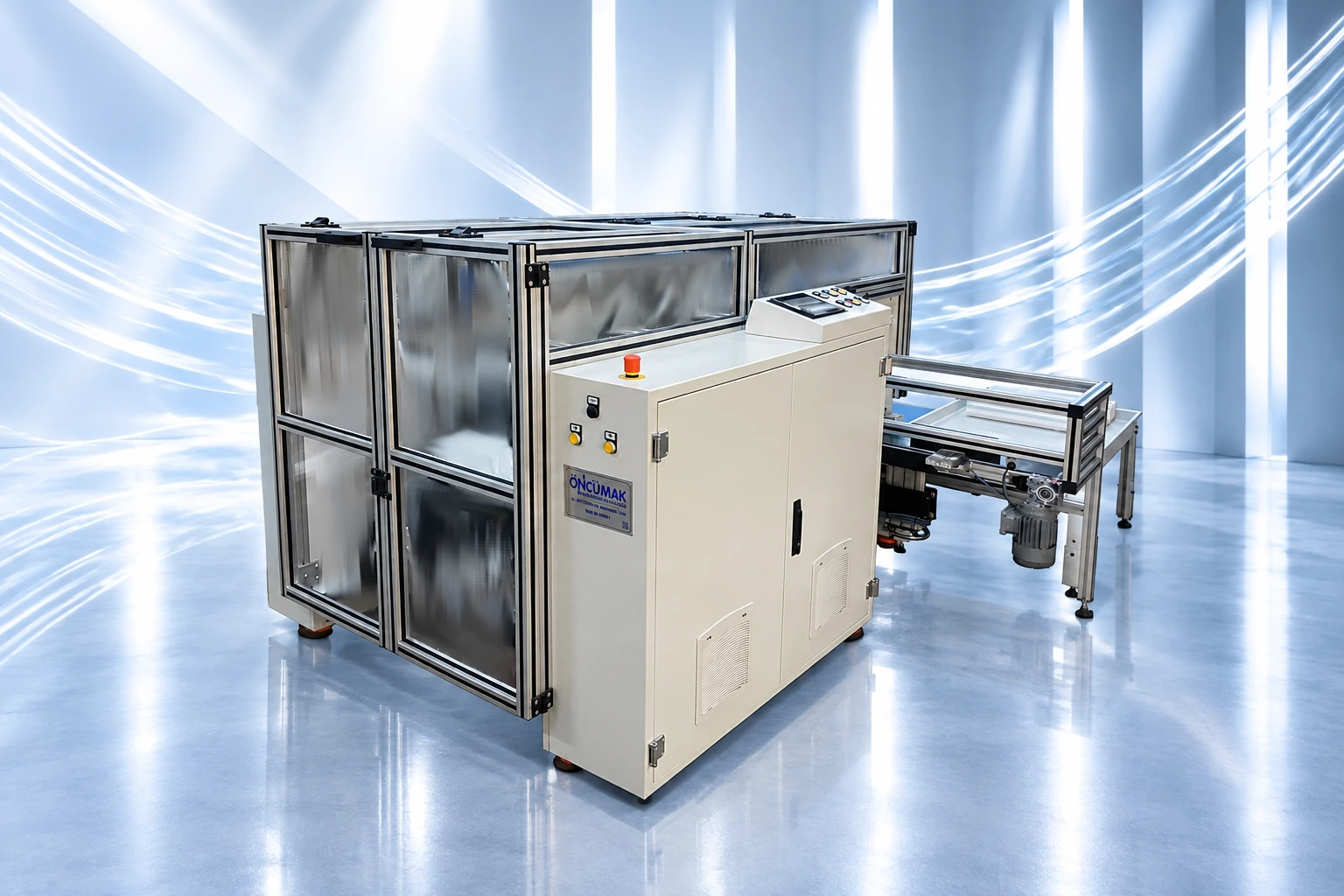 CR-1700Coreless Stretch Film RewinderView machine
- How to choose a stretch film rewinding machineStart from the rolls you want to sell, not from the machine: the roll type, the widths, your volumes and the jumbo rolls you can buy decide which rewinder fits. Then compare speed, tension control, core sizes and after-sales support, and look at the total cost, not only the price.
- How to calculate stretch film roll length and weightThe net film weight of a roll is length × width × thickness × density. With LLDPE's density of about 0.92 g/cm³, a 50 cm wide, 20 µm film weighs about 9.2 g per metre, so a 300 m hand roll holds about 2.8 kg of film. The formula lets you compare offers and check what you are actually buying.
- Stretch film thickness: what do the microns change?Thickness decides how many metres of film you get per kilo, how well the film resists punctures and what it costs per pallet, but it does not decide on its own how well a load is held. Film quality and how far the film is stretched matter just as much.
- How much does a stretch film rewinding machine produce?Theoretical hourly and monthly output of Öncümak's rewinding machines, with every assumption behind the figures, and the factors that make real production higher or lower.
- How to choose jumbo rolls for stretch film rewindingThe jumbo roll decides what your finished rolls can be. First check that its width, weight and thickness fit your machine; then look at cast or blown film, cling, stretch performance and roll quality. Buy to a written specification, inspect every delivery and run a trial before you order in volume.
- What determines the price of stretch film?Stretch film is sold by weight, so the price of a roll comes down to how many kilograms of film it holds and what each kilogram costs. The cost per kilogram depends on the raw material, the film grade and any extras such as colour, UV protection or recycled content; the roll format and the order size add to it. Compare offers by the price per kilogram of net film and by the cost per pallet, not by the price per roll.