Stretch film basics
Why stretch film tears, breaks or does not cling, and how to fix it
Written by Öncümak Engineering Team4 min read
In short
Most film breaks start at the load (sharp corners and edges), in the roll (nicks, damaged edges, flaws) or in the settings (too much force or pre-stretch). Poor cling usually comes from cold, very fresh or badly stored film. Check the load, the roll and the settings, in that order, before you change the film.
All topics
Stretch film basics
- What is stretch film?
- Hand vs machine stretch film: what's the difference?
- What is pre-stretched film?
- What is coreless stretch film?
- PE stretch film vs PVC cling film: what's the difference?
- Is stretch film recyclable?
- Where is slit stretch film used?
- Black and coloured stretch film: what is the colour for?
- Why stretch film tears, breaks or does not cling, and how to fix it
- How to wrap a pallet with stretch film
- How many pallets does a roll of stretch film wrap? Film use and cost per pallet
- Stretch film vs shrink film: what is the difference?
- How to use coreless stretch film: handles, dispensers and wrapping machines
- When is pre-stretched film not the right choice?
- How to measure the pre-stretch on a pallet wrapper
- Stretch hood vs stretch wrap: which one fits your pallets?
- How wrapped pallets are tested: load stability and EUMOS 40509
- Recycled content (PCR) stretch film and plastic packaging taxes
- How to store stretch film: temperature, humidity and shelf life
- One-sided vs two-sided cling stretch film
- UV-resistant stretch film for outdoor storage
- Stretch film for moving house: how to wrap furniture and boxes
- Slit stretch film, strapping or tape: which one for bundling?
- Which width for which product? Slit stretch film rolls and dispensers
Advice & investment
- How to choose a stretch film rewinding machine
- How to calculate stretch film roll length and weight
- Stretch film thickness: what do the microns change?
- How much does a stretch film rewinding machine produce?
- How to start a stretch film rewinding business
- How to choose jumbo rolls for stretch film rewinding
- What determines the price of stretch film?
Where breaks come from
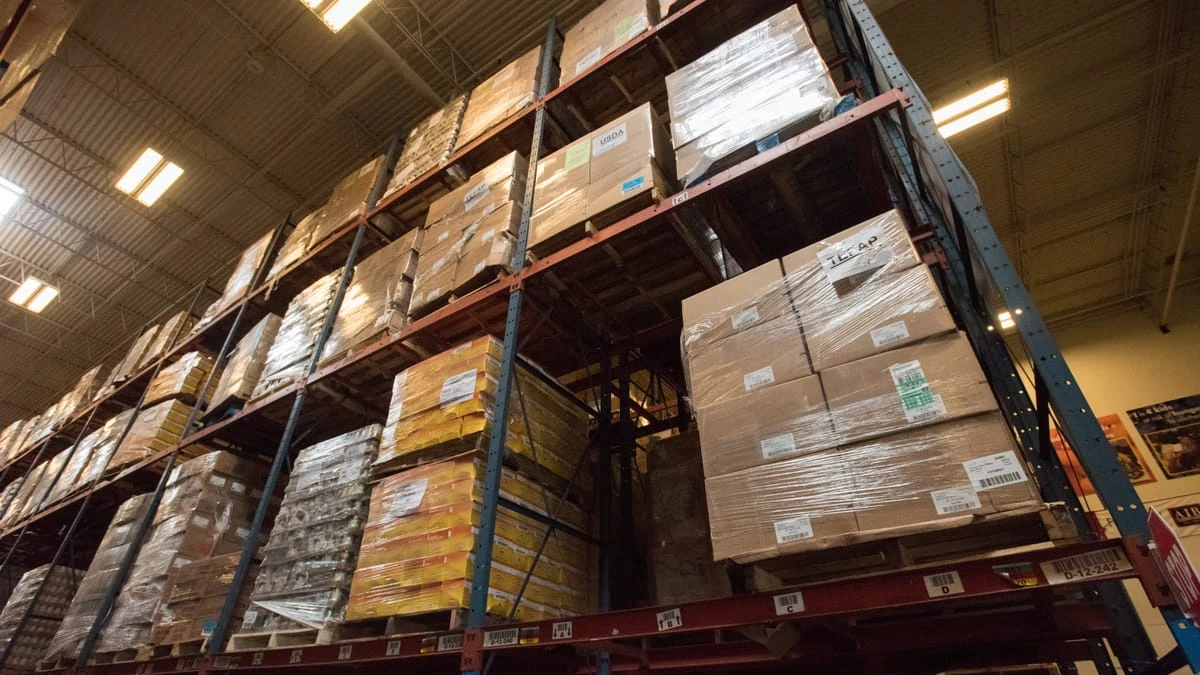
Film breaks are the most common problem in stretch wrapping. Lantech, a maker of stretch wrapping machines, reports that on automatic high-speed wrappers film breaks about 3 to 7 times per roll on average, and names the load itself as the most likely cause. The usual suspects, in the order worth checking:
- The load: sharp corners, edges and anything that sticks out.
- The roll: nicks, damaged edges and flaws in the film.
- The settings: too much wrap force or pre-stretch for the film.
- Temperature: film that is too cold.
1. The load
- Sharp corners and edges: cartons with hard corners, metal parts, pallet boards that stick out. Use corner boards or edge protectors.
- Uneven layers: products set back from the pallet edge, or sticking out beyond it, put the film under uneven stress. Build square, even loads.
- Overhang: the load should not hang over the pallet edges.
2. The roll
- Damaged edges: a roll that has been dropped or knocked usually breaks at the edge. Keep rolls in their boxes until use, and do not drop or throw them.
- Flaws in the film: holes, gels or thin spots break under stretch. If breaks happen at the same point on several rolls of one batch, show them to your supplier.
- Folded edges help: reinforced, folded edges resist tears that start at the edge, especially on thin pre-stretched film.
3. The settings
- Too much force or pre-stretch: every film has a limit. If breaks start after a change of film or settings, go back one step.
- Threading: film threaded the wrong way through the carriage breaks easily; follow the threading diagram of your wrapper.
- Rollers: dirty, worn or damaged rollers on the wrapper mark and weaken the film.
4. Temperature
Film makers recommend storing stretch film at about 10–30 °C and letting it adapt to the room where it will be used for at least 24 hours. Packaging suppliers note that colder film becomes stiffer, stretches less and clings less. Film stored in direct sun or in a hot place can also behave differently, so keep it indoors and out of sunlight.
Why film does not cling
- Cold: cling drops at low temperatures; warm the film to room temperature first.
- Very fresh film: the cling agent (often polyisobutylene, PIB) moves to the surface after production. Published research found that cling forces reach their maximum about two weeks after production.
- Wrong side out: with one-sided cling film, the clinging side should face the load.
- Dust and moisture: a dusty or wet surface weakens cling between the layers.
- Old or badly stored film: film makers recommend using stretch film within about a year.
Problems on the rewinding side
Many problems users see on the pallet start earlier, at the rewinder:
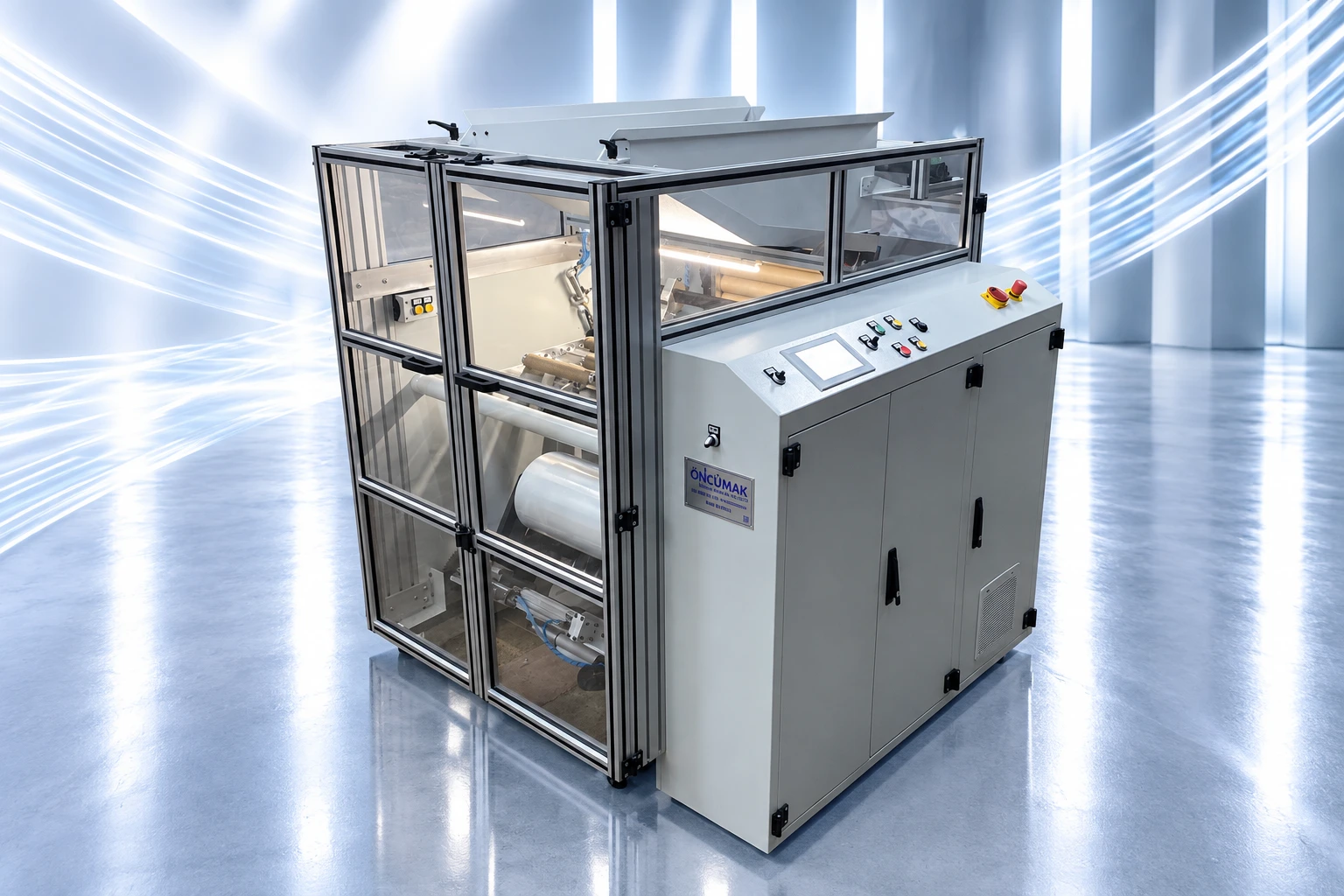
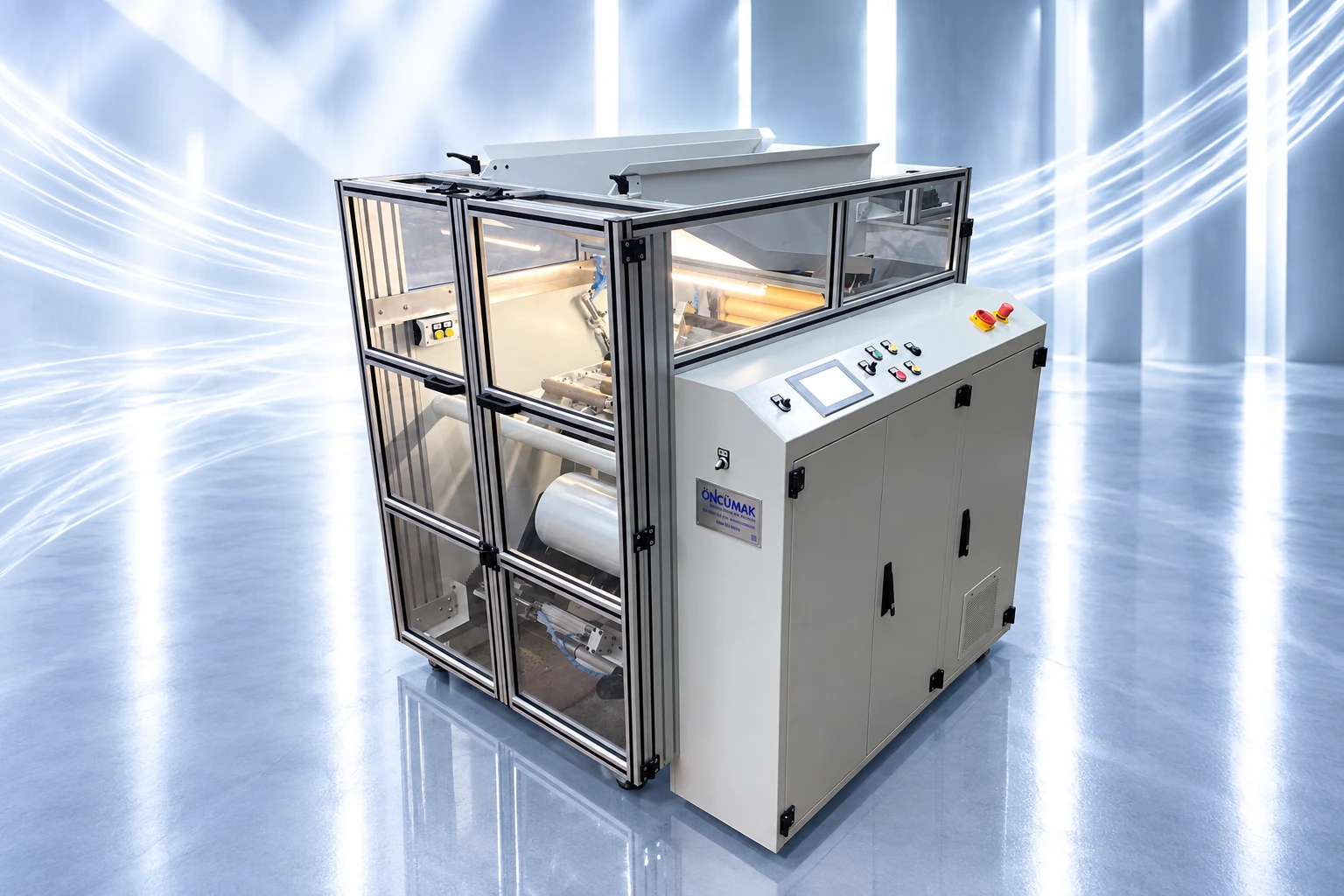
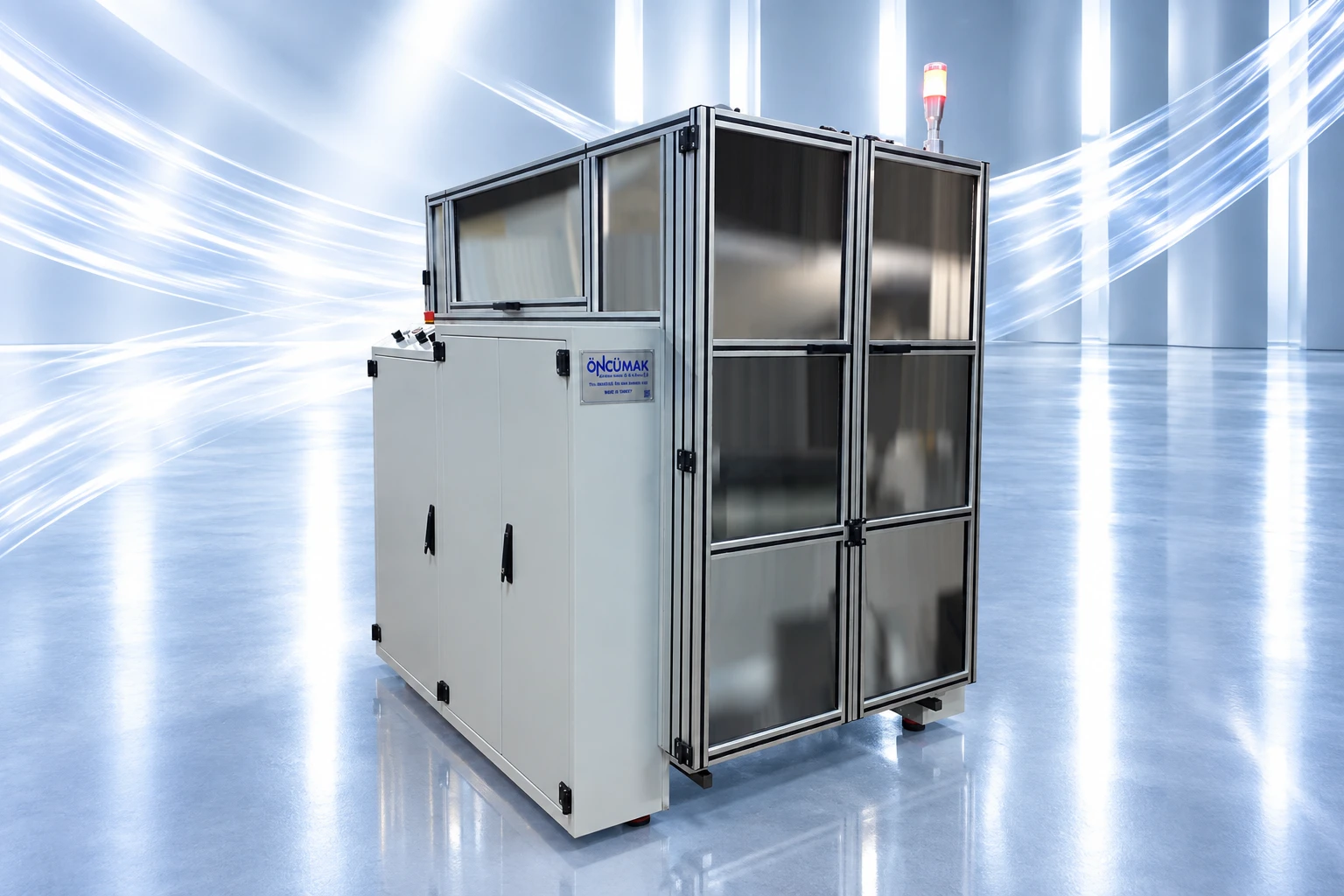
- Uneven tension: rolls wound too tight or too loose stretch unevenly. Jumbo rolls with varying cling make this harder; independent servo control of unwinding and rewinding, as on the SM-1300 2S and SM-1300 2S PRO, lets the operator set tension from the touchscreen for each jumbo roll.
- Edge damage: nicks on the jumbo roll edges repeat on every finished roll. Inspect jumbo rolls on arrival; see how to choose jumbo rolls.
- Short or light rolls: a roll that runs out early is often shorter or thinner than its label says. See roll length and weight.
Quick checklist
| Symptom | Likely cause | What to check |
|---|---|---|
| Breaks at the same corner of the load | Sharp corner or edge | Corner boards, load shape |
| Breaks start at the film edge | Damaged roll edge | Roll handling and storage, folded edges |
| Breaks after changing settings or film | Force or pre-stretch too high | Go back to the last good setting |
| Breaks in cold weather | Cold, stiff film | Store and use at room temperature |
| Layers do not stick | Cold, fresh or dusty film, wrong side out | Temperature, film age, clinging side |
| Load loose after transport | Too little holding force | Number of wraps and wrap force |
Sources(5)
- Lantech. 7 reasons film breaks on a stretch wrapper and why you should care
- Polifilm. FAQs about stretch films
- Polifilm. Application advice for stretch films
- Roberge, D. (2018). Storing shrink film and packaging materials. Industrial Packaging.
- Cabrera, G., Pichon, G., Maazouz, A., Lamnawar, K. (2021). Rheology and tribology: investigating the migration of small molecules in recycled agricultural waste multilayer films. ESAFORM 2021.
Related machines
- What is stretch film?Stretch film is a thin, highly elastic plastic film, usually made from LLDPE, that is stretched around goods and holds them together as it tries to return to its original length. It keeps pallets stable, clean and tamper-evident during storage and transport.
- Hand vs machine stretch film: what's the difference?Hand stretch film comes in small, light rolls that people apply by hand; machine stretch film comes in larger, heavier rolls made for pallet wrapping machines. Both are usually LLDPE; the differences are roll size, core, how far the film is stretched and how it is applied.
- What is pre-stretched film?Pre-stretched film is stretch film that has already been stretched, typically by 300–500%, during rewinding, before it reaches the user. It is thinner and lighter, takes far less effort to apply and uses less film per pallet, but it has little stretch left, so it suits standard loads better than very sharp or irregular ones.
- What is coreless stretch film?Coreless stretch film is wound without a paper core, so the whole roll is usable film. It removes the cost and waste of cores, makes rolls lighter to ship and to dispose of, and is usually applied with a simple reusable handle or dispenser.
- PE stretch film vs PVC cling film: what's the difference?PE stretch film is a polyethylene film made to secure pallets and bundles. PVC cling film is a thin, clear film made from polyvinyl chloride, used mainly to wrap food. They are different materials for different jobs, and PVC cling film, as a food-contact material, has to meet food-contact legislation.
- Is stretch film recyclable?Yes. Stretch film is polyethylene, marked with recycling code 4 (LDPE), and can be recycled where used film is collected clean and separately from other materials. New packaging rules in the EU and Türkiye push in the same direction: less packaging, recyclable packaging and responsibility for the packaging you place on the market.
- Where is slit stretch film used?Slit stretch film is ordinary stretch film cut into narrow rolls. Narrow rolls are easier to handle on small, long or round products (profiles, cables, hoses, pipes) and are used for bundling and surface protection, from building-product plants to car workshops.
- Black and coloured stretch film: what is the colour for?Most stretch film is clear, but black, white and coloured films exist for good reasons: hiding and protecting the load, colour-coding pallets or showing a brand. Colour also affects how easily the film can be recycled.
- How to wrap a pallet with stretch filmFasten the film to the pallet, wrap the base several times so the load is locked to the pallet, spiral up with an even overlap and finish with extra wraps at the top. The holding force comes from the film's tension and the number of layers, so the right number of wraps depends on the load. For loads that travel by road, machine wrapping gives far more holding force than wrapping by hand.
- How many pallets does a roll of stretch film wrap? Film use and cost per palletThe fastest way to find out is to weigh: weigh a roll, wrap ten pallets, weigh it again and divide. To estimate before you wrap, multiply the number of wraps by the pallet's perimeter, divide by how far the film is stretched, and convert metres to grams. Compare films by cost per pallet, not by price per roll.
- Stretch film vs shrink film: what is the difference?Stretch film is applied cold: it is stretched around the load and holds it as it tries to contract. Shrink film is applied loose and then heated, so that it shrinks tightly around the product. Stretch film is the usual choice for pallets; shrink film is used for retail packs and for some pallet loads such as bricks, where it is applied as a hood and heated.
- How to use coreless stretch film: handles, dispensers and wrapping machinesA coreless roll has a hole where the core would be. By hand, it is used with a reusable handle or dispenser that fits into that hole, so the roll is easy to hold and its last metres can be used too. On pallet wrapping machines, a reusable adapter takes the place of the core. Match the handle or adapter to the roll's inner diameter and the whole roll can be used.
- When is pre-stretched film not the right choice?Pre-stretched film saves film and effort when pallets are wrapped by hand or on simple wrappers. It is not the right tool for holding heavy or unstable loads together by hand, and it is not meant for wrappers with powered pre-stretch, which stretch conventional machine film themselves. Choose by the load, the wrapping method and the cost per pallet.
- How to measure the pre-stretch on a pallet wrapperPre-stretch is given as the percentage by which the film gets longer: at 250%, one metre of film from the roll becomes 3.5 metres. To check it, draw two marks 10 cm apart on the film before it is stretched and measure them again afterwards. Measure whenever you change the film or the settings: the stretch decides how much film each pallet uses.
- Stretch hood vs stretch wrap: which one fits your pallets?A stretch hood is a film sleeve, smaller than the load, that a machine stretches and pulls over the pallet; stretch wrap is film wound around the load in layers. Hoods are fast, fully automatic and protect well against the weather, but each load size needs its own hood. Stretch wrap adapts to almost any load, by machine or by hand.
- How wrapped pallets are tested: load stability and EUMOS 40509A wrapped pallet is tested by pushing it sideways with a known force, usually 0.5 g, and measuring how far it deforms. The European guidelines describe a tilt test and two acceleration tests; the pallet-level acceleration test follows EUMOS 40509. A pallet passes if it springs back within set limits and nothing is damaged.
- Recycled content (PCR) stretch film and plastic packaging taxesStretch film counts as plastic packaging, so plastic packaging taxes and recycled-content rules apply to it. The UK taxes plastic packaging with less than 30% recycled content, Spain taxes the non-recycled plastic in single-use packaging, Türkiye charges a recovery contribution per kilogram, and from 2030 the EU will require 35% post-consumer recycled content in most plastic packaging. Check the details for your country with an advisor.
- How to store stretch film: temperature, humidity and shelf lifeStore stretch film indoors, away from sunlight and moisture, at about 10–30 °C and 25–60% relative humidity, and use it within a year. Let it adapt to the room where it will be used for at least 24 hours. Cold film is stiffer and stretches less, and very fresh film may not cling fully yet.
- One-sided vs two-sided cling stretch filmCling is what makes the layers of stretch film stick to each other. It can be built into one side of the film, both sides, or both sides at different levels. One-sided cling film keeps neighbouring pallets from sticking together, but the cling side must face the load. You can find the cling side by sticking the film to itself.
- UV-resistant stretch film for outdoor storageStandard stretch film is not UV-resistant: in sunlight it yellows, weakens and loses its cling and stretch. UV-stabilised film contains an additive that slows this down, and producers state protection for about 9 to 12 months outdoors. Clear UV film protects the film itself; to protect sun-sensitive goods too, use an opaque UV film.
- Stretch film for moving house: how to wrap furniture and boxesStretch film is one of the handiest materials for a move: it keeps drawers and doors shut, bundles loose parts and protects surfaces from dust and scratches. Clean and dry everything first, and never wrap wood, antiques, leather or upholstery directly: put blankets or paper underneath so that moisture is not trapped.
- Slit stretch film, strapping or tape: which one for bundling?For light bundling, a narrow roll of stretch film is often the simplest choice: it clings to itself, covers and protects the surface and leaves no adhesive residue. Straps are cheap and very good at stopping loads from tilting, but they need corner protection and plastic straps lose tension over time. Tape closes boxes but can leave residue on the goods. Heavy loads often need film and straps together.
- Which width for which product? Slit stretch film rolls and dispensersSlit rolls are cut from a jumbo roll into equal widths: a 50 cm jumbo roll gives 25, 16.6, 12.5 or 10 cm rolls and so on down to 5 cm. As a rule, the thinner and rounder the item, the narrower the roll. A handle or dispenser that fits the roll's core makes narrow film faster and easier to apply.