Advice & investment
How to choose a stretch film rewinding machine
Written by Öncümak Engineering Team3 min read
In short
Start from the rolls you want to sell, not from the machine: the roll type, the widths, your volumes and the jumbo rolls you can buy decide which rewinder fits. Then compare speed, tension control, core sizes and after-sales support, and look at the total cost, not only the price.
All topics
Stretch film basics
- What is stretch film?
- Hand vs machine stretch film: what's the difference?
- What is pre-stretched film?
- What is coreless stretch film?
- PE stretch film vs PVC cling film: what's the difference?
- Is stretch film recyclable?
- Where is slit stretch film used?
- Black and coloured stretch film: what is the colour for?
- Why stretch film tears, breaks or does not cling, and how to fix it
- How to wrap a pallet with stretch film
- How many pallets does a roll of stretch film wrap? Film use and cost per pallet
- Stretch film vs shrink film: what is the difference?
- How to use coreless stretch film: handles, dispensers and wrapping machines
- When is pre-stretched film not the right choice?
- How to measure the pre-stretch on a pallet wrapper
- Stretch hood vs stretch wrap: which one fits your pallets?
- How wrapped pallets are tested: load stability and EUMOS 40509
- Recycled content (PCR) stretch film and plastic packaging taxes
- How to store stretch film: temperature, humidity and shelf life
- One-sided vs two-sided cling stretch film
- UV-resistant stretch film for outdoor storage
- Stretch film for moving house: how to wrap furniture and boxes
- Slit stretch film, strapping or tape: which one for bundling?
- Which width for which product? Slit stretch film rolls and dispensers
Advice & investment
- How to choose a stretch film rewinding machine
- How to calculate stretch film roll length and weight
- Stretch film thickness: what do the microns change?
- How much does a stretch film rewinding machine produce?
- How to start a stretch film rewinding business
- How to choose jumbo rolls for stretch film rewinding
- What determines the price of stretch film?
1. Decide what you will sell
The product decides the machine type:
- Standard hand and machine rolls, PVC cling film: a conventional rewinder such as the SR-1500 (an optional cold-knife cutting system is available for food film). The SM-1300 models rewind the same films and add optional slitting.
- Several widths from one jumbo roll, narrow bundling rolls: a rewinder with slitting, such as the SM-1300 series (2 to 10 equal rolls, slitting optional) or, for two coreless rolls, the CR-1700.
- Pre-stretched film: a pre-stretch rewinder such as the SP-1400, which pre-stretches the film by up to 500%.
- Coreless rolls: a coreless rewinder such as the CR-1700.
See the types of rewinding machines for what each one does.
2. Estimate your volume
Think in finished rolls per shift, not only in top speed. Top speeds in the Öncümak range run from 1100 mt/min (SP-1400) to 1510 mt/min (SM-1300 2S PRO), and the CR-1700 has a capacity of up to 120 tons per month. Real output also depends on roll length, how quickly rolls are changed and how much the operator has to do between them, which is where full automation pays off.
3. Check your jumbo rolls and cores
The machine has to accept the material you can buy and produce the rolls your customers expect:
- Jumbo roll width and weight: Öncümak machines take jumbo rolls of roughly 300–580 mm and up to 70 kg.
- Core diameter: 38, 50 and 76 mm are the common sizes. Cores are bought ready-cut to the roll width from a supplier; the machine does not cut them.
- Film thickness: the range handles 8–35 µm film.
- Finished roll size: up to 240 mm diameter.
4. Think about film variety and tension
Jumbo rolls from different producers, and even different batches, differ in cling and in how they react to tension. If you plan to buy from several sources, independent servo control of unwinding and rewinding makes a real difference: the SM-1300 L runs on one asynchronous motor, while the SM-1300 2S and SM-1300 2S PRO use two servo motors and the SP-1400 uses three, with tension set from the touchscreen.
5. Look beyond the price
The purchase price is only part of the cost. Include film waste at start-up and roll changes, downtime, spare parts and how quickly they arrive, operator training, and installation support. A machine that runs reliably for years usually costs less than a cheaper one that stops often.
Quick selection guide
| If you need… | Consider |
|---|---|
| An entry point, standard hand and machine rolls | SR-1500 |
| Several widths from one jumbo roll | SM-1300 L |
| Precise tension for jumbo rolls with varying cling | SM-1300 2S |
| The highest speed in the range | SM-1300 2S PRO |
| Pre-stretched film | SP-1400 |
| Coreless, zero-core-waste rolls | CR-1700 |
All models are compared on one page in the Machine Guide.
Related machines
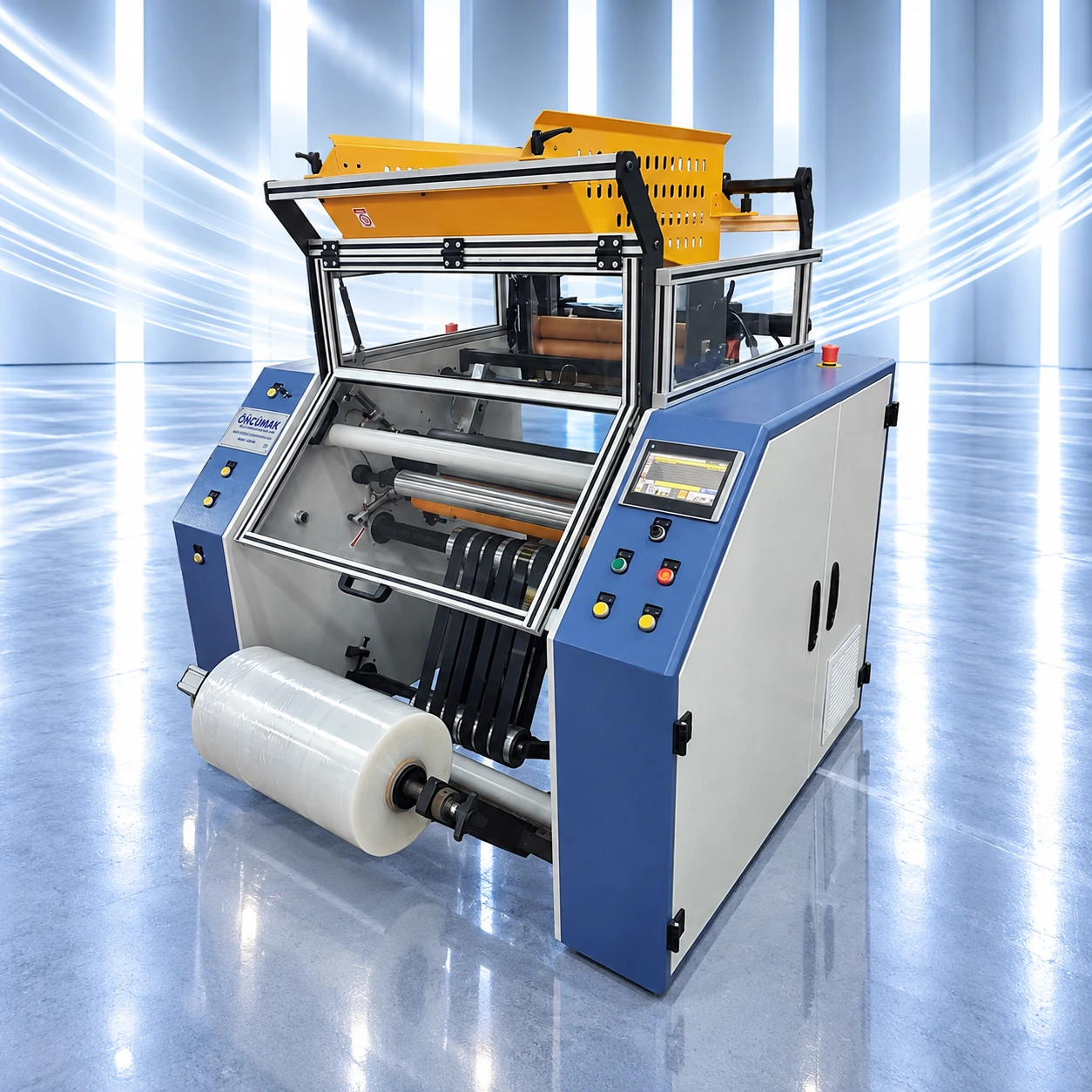 SR-1500Conventional Stretch Film RewindingView machine
 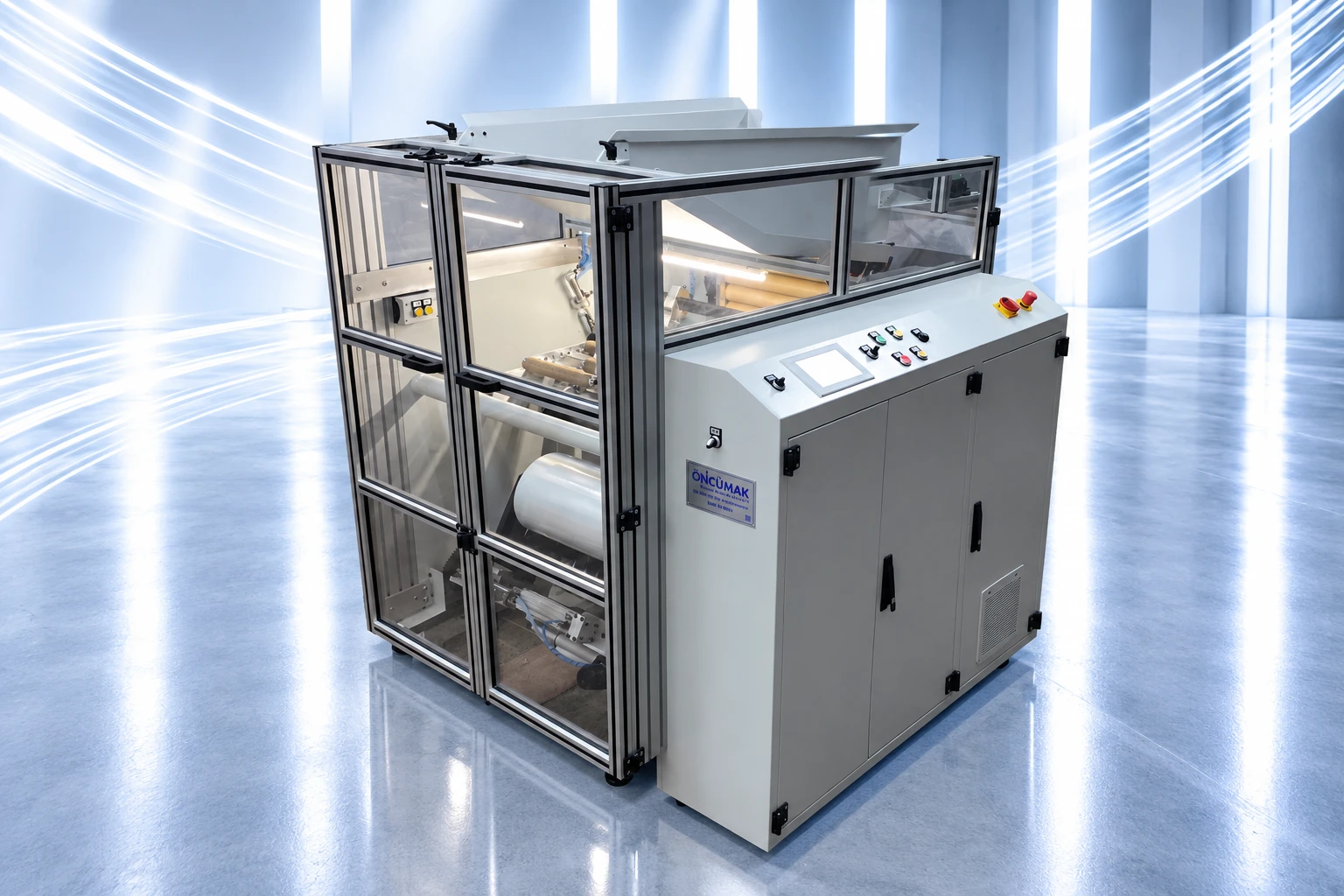 SM-1300 LStretch Film Rewinder & SlitterView machine
 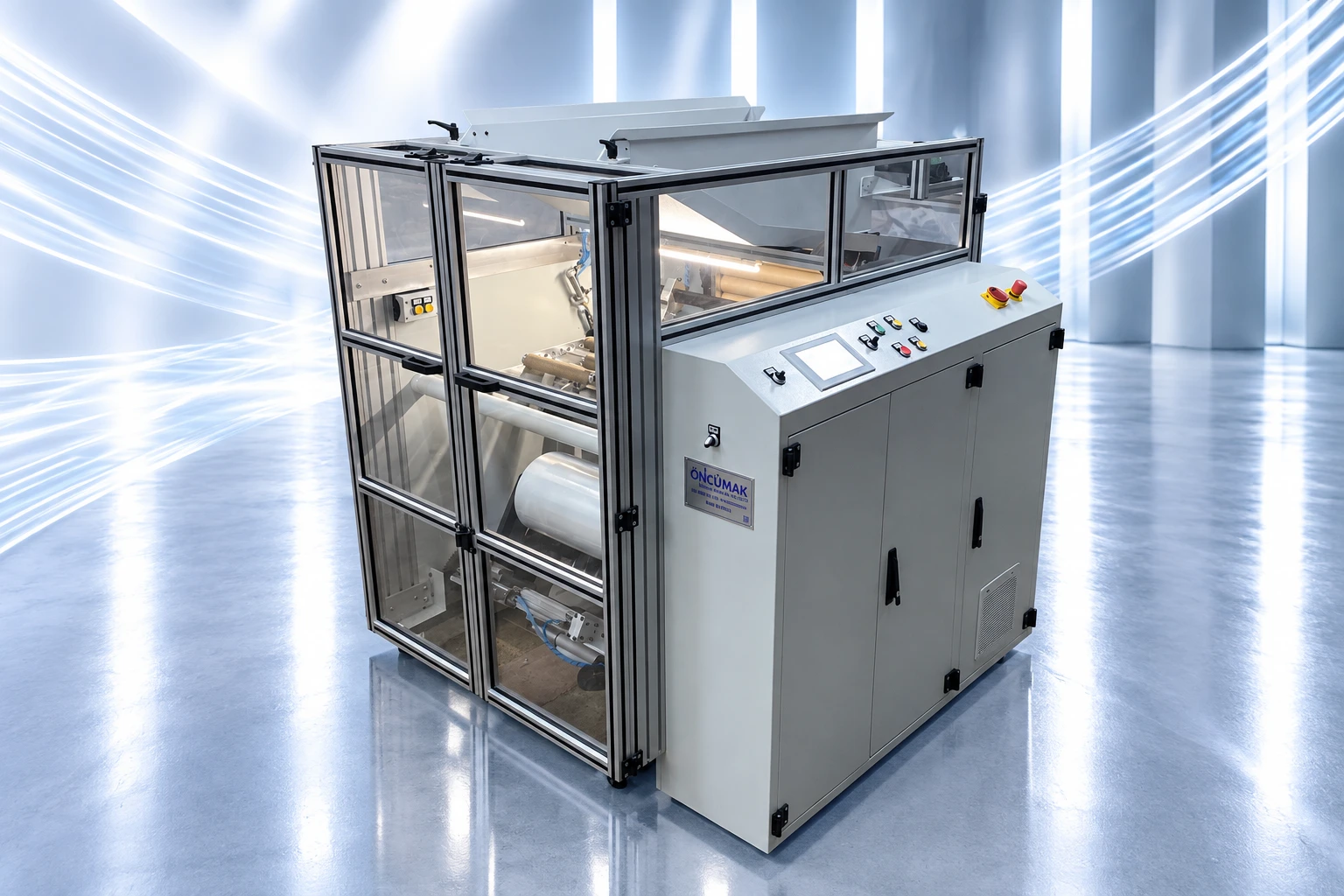 SM-1300 2SDual-Servo Stretch Film Rewinder & SlitterView machine
 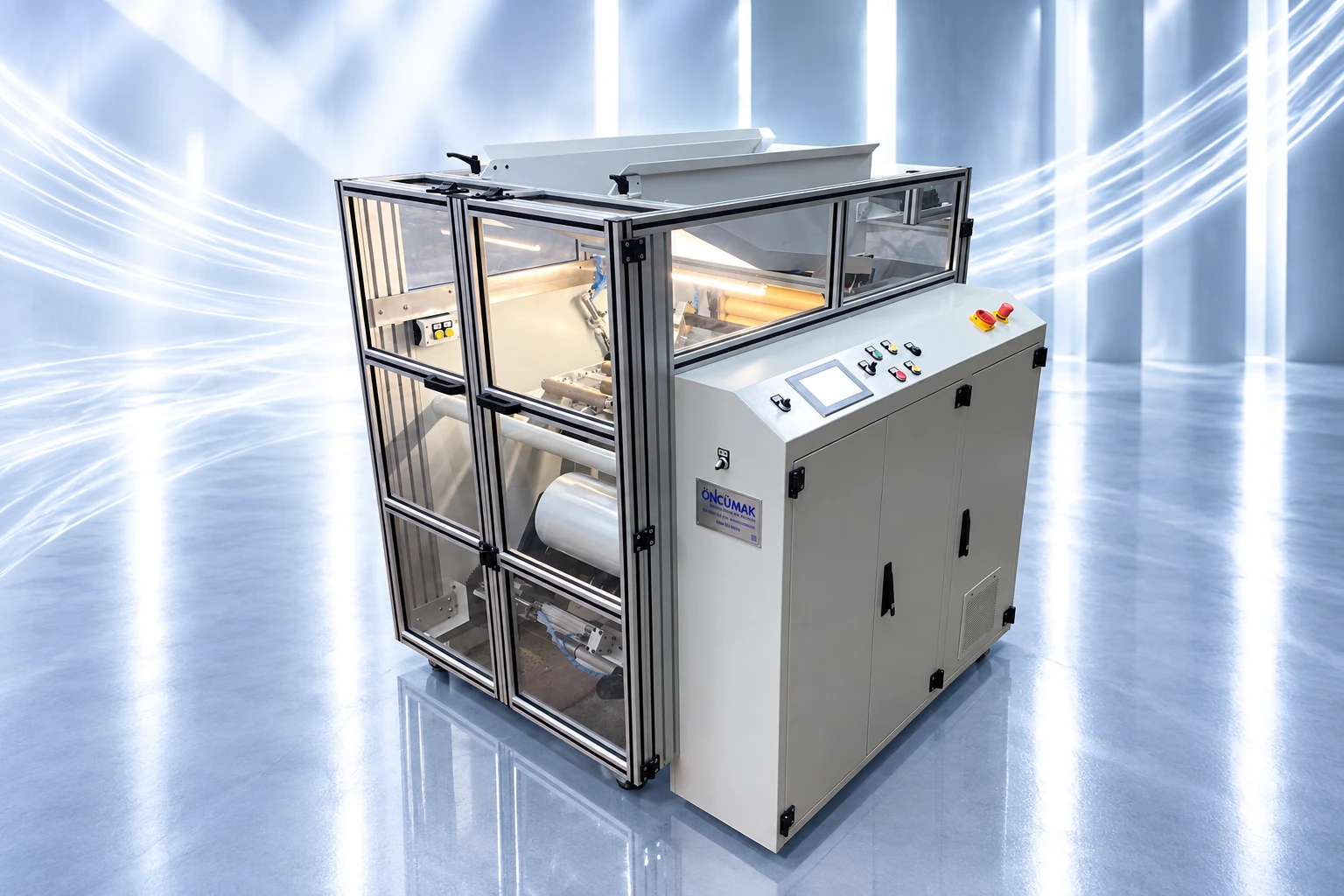 SM-1300 2S PROHigh-Performance Dual-Servo Stretch Film SlitterView machine
 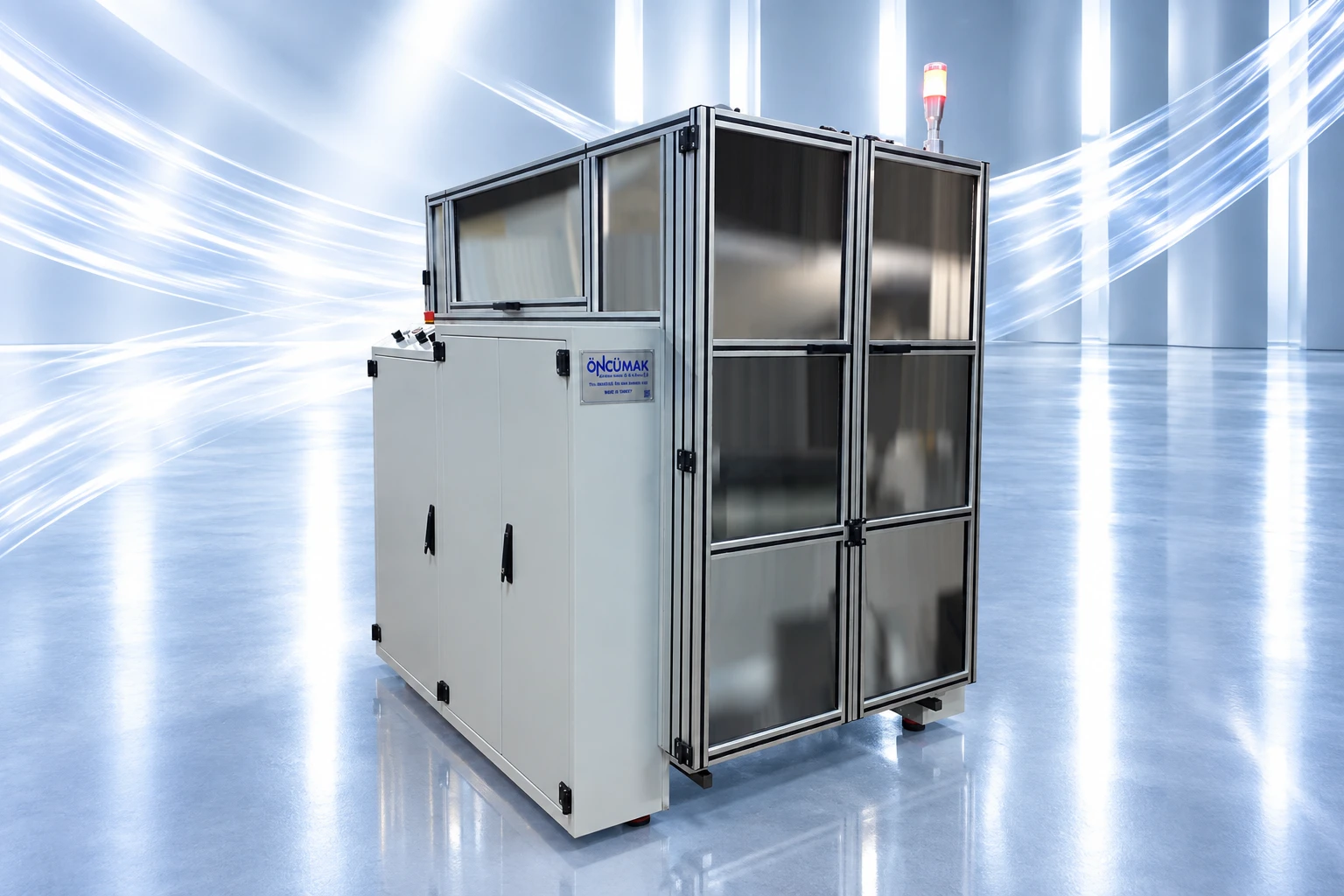 SP-1400Pre-Stretch Film RewinderView machine
 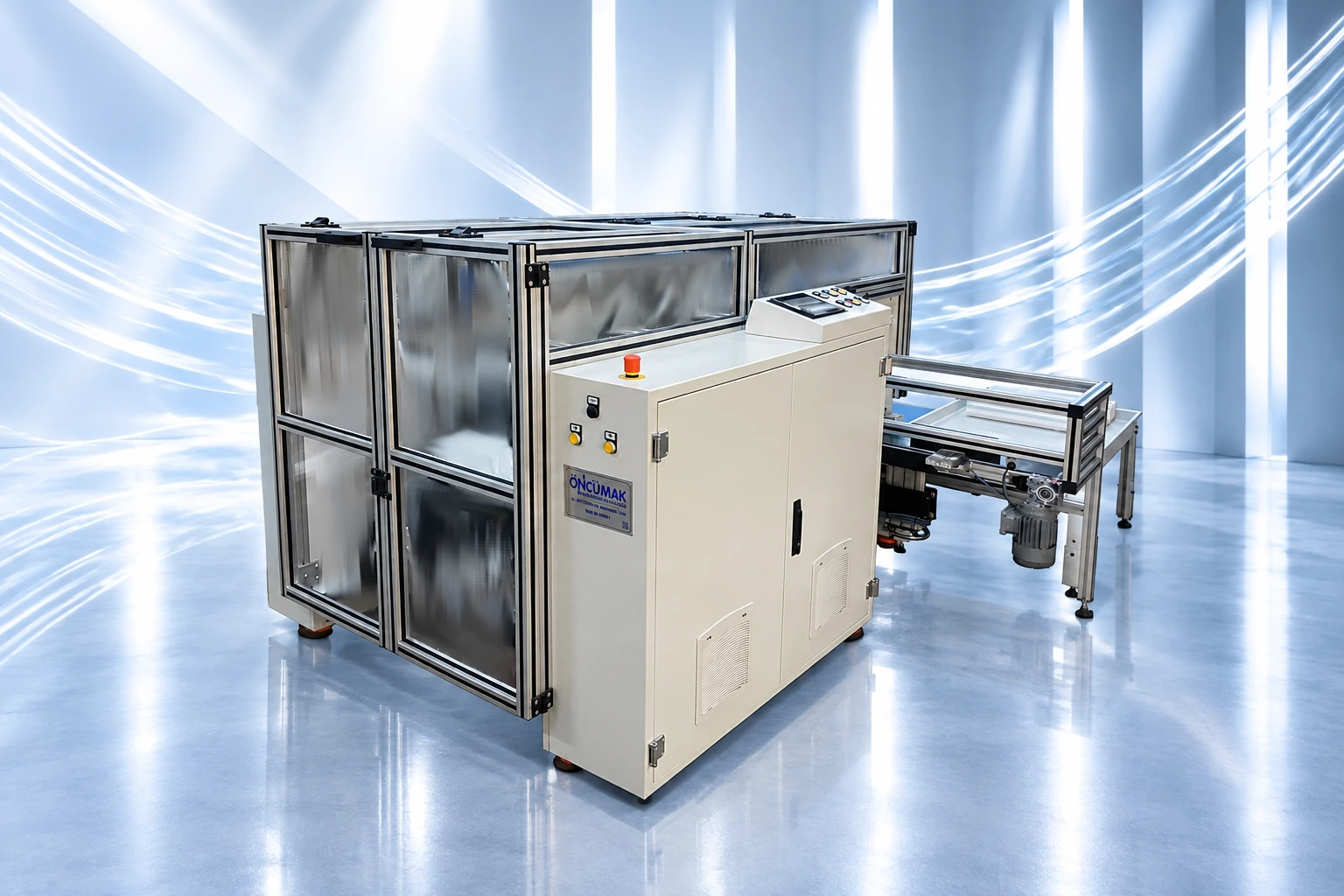 CR-1700Coreless Stretch Film RewinderView machine
- How to calculate stretch film roll length and weightThe net film weight of a roll is length × width × thickness × density. With LLDPE's density of about 0.92 g/cm³, a 50 cm wide, 20 µm film weighs about 9.2 g per metre, so a 300 m hand roll holds about 2.8 kg of film. The formula lets you compare offers and check what you are actually buying.
- Stretch film thickness: what do the microns change?Thickness decides how many metres of film you get per kilo, how well the film resists punctures and what it costs per pallet, but it does not decide on its own how well a load is held. Film quality and how far the film is stretched matter just as much.
- How much does a stretch film rewinding machine produce?Theoretical hourly and monthly output of Öncümak's rewinding machines, with every assumption behind the figures, and the factors that make real production higher or lower.
- How to start a stretch film rewinding businessA rewinding business buys jumbo rolls from film producers, rewinds them into the rolls its market buys and sells them under its own name. To start, you need customers who buy a clear set of roll types, a steady supply of jumbo rolls and cores, a rewinding machine that matches those rolls, a 400 V three-phase supply, storage space, trained operators and simple quality checks.
- How to choose jumbo rolls for stretch film rewindingThe jumbo roll decides what your finished rolls can be. First check that its width, weight and thickness fit your machine; then look at cast or blown film, cling, stretch performance and roll quality. Buy to a written specification, inspect every delivery and run a trial before you order in volume.
- What determines the price of stretch film?Stretch film is sold by weight, so the price of a roll comes down to how many kilograms of film it holds and what each kilogram costs. The cost per kilogram depends on the raw material, the film grade and any extras such as colour, UV protection or recycled content; the roll format and the order size add to it. Compare offers by the price per kilogram of net film and by the cost per pallet, not by the price per roll.