Rewinding machines
What is a stretch film rewinding machine?
Written by Öncümak Engineering Team3 min read
In short
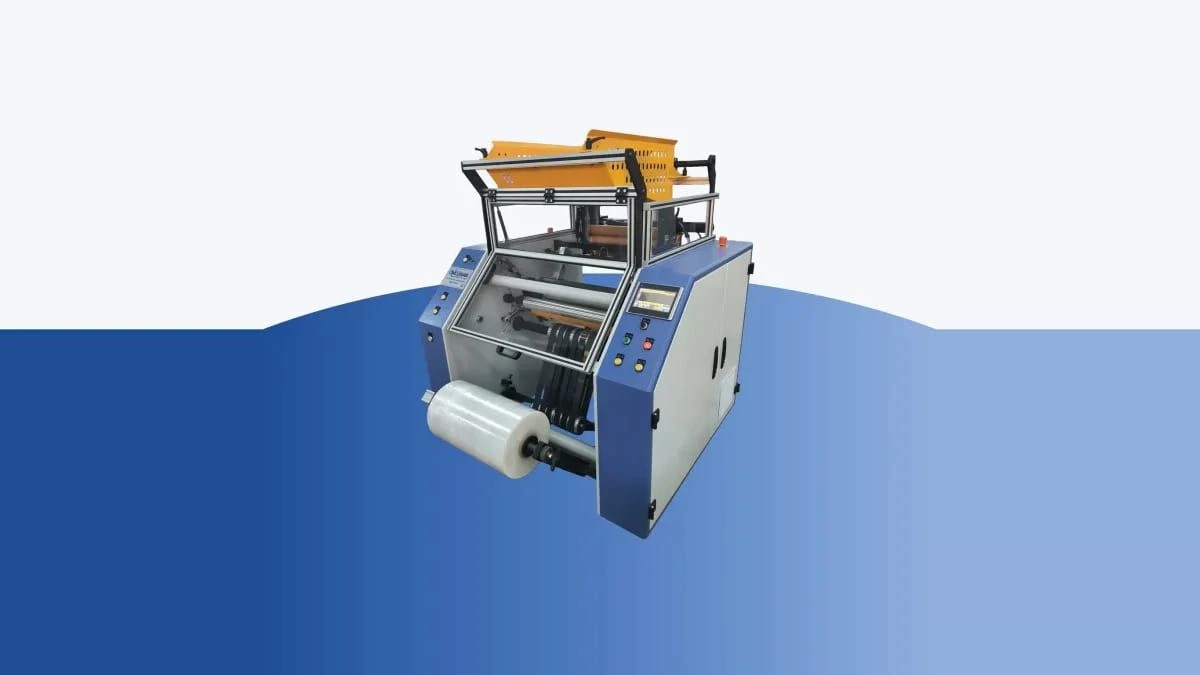
A stretch film rewinding machine unwinds the large jumbo rolls that come from film producers and rewinds the film onto smaller rolls ready for sale, in the length, weight and core size the market needs. Depending on the model it can also slit the film, pre-stretch it or wind rolls without a core.
All topics
Stretch film basics
- What is stretch film?
- Hand vs machine stretch film: what's the difference?
- What is pre-stretched film?
- What is coreless stretch film?
- PE stretch film vs PVC cling film: what's the difference?
- Is stretch film recyclable?
- Where is slit stretch film used?
- Black and coloured stretch film: what is the colour for?
- Why stretch film tears, breaks or does not cling, and how to fix it
- How to wrap a pallet with stretch film
- How many pallets does a roll of stretch film wrap? Film use and cost per pallet
- Stretch film vs shrink film: what is the difference?
- How to use coreless stretch film: handles, dispensers and wrapping machines
- When is pre-stretched film not the right choice?
- How to measure the pre-stretch on a pallet wrapper
- Stretch hood vs stretch wrap: which one fits your pallets?
- How wrapped pallets are tested: load stability and EUMOS 40509
- Recycled content (PCR) stretch film and plastic packaging taxes
- How to store stretch film: temperature, humidity and shelf life
- One-sided vs two-sided cling stretch film
- UV-resistant stretch film for outdoor storage
- Stretch film for moving house: how to wrap furniture and boxes
- Slit stretch film, strapping or tape: which one for bundling?
- Which width for which product? Slit stretch film rolls and dispensers
Advice & investment
- How to choose a stretch film rewinding machine
- How to calculate stretch film roll length and weight
- Stretch film thickness: what do the microns change?
- How much does a stretch film rewinding machine produce?
- How to start a stretch film rewinding business
- How to choose jumbo rolls for stretch film rewinding
- What determines the price of stretch film?
Why rewinding is needed
Stretch film leaves the extrusion line on jumbo rolls: large master rolls that no end user could handle. Film producers, converters and packaging distributors therefore rewind them into the rolls their customers actually buy: hand rolls of a few kilograms, machine rolls for pallet wrappers, pre-stretched or coreless rolls, often under their own brand and in their own lengths and weights.
Öncümak's machines, for example, take jumbo rolls roughly 300–580 mm wide and up to 70 kg, and produce rolls up to 240 mm in diameter.
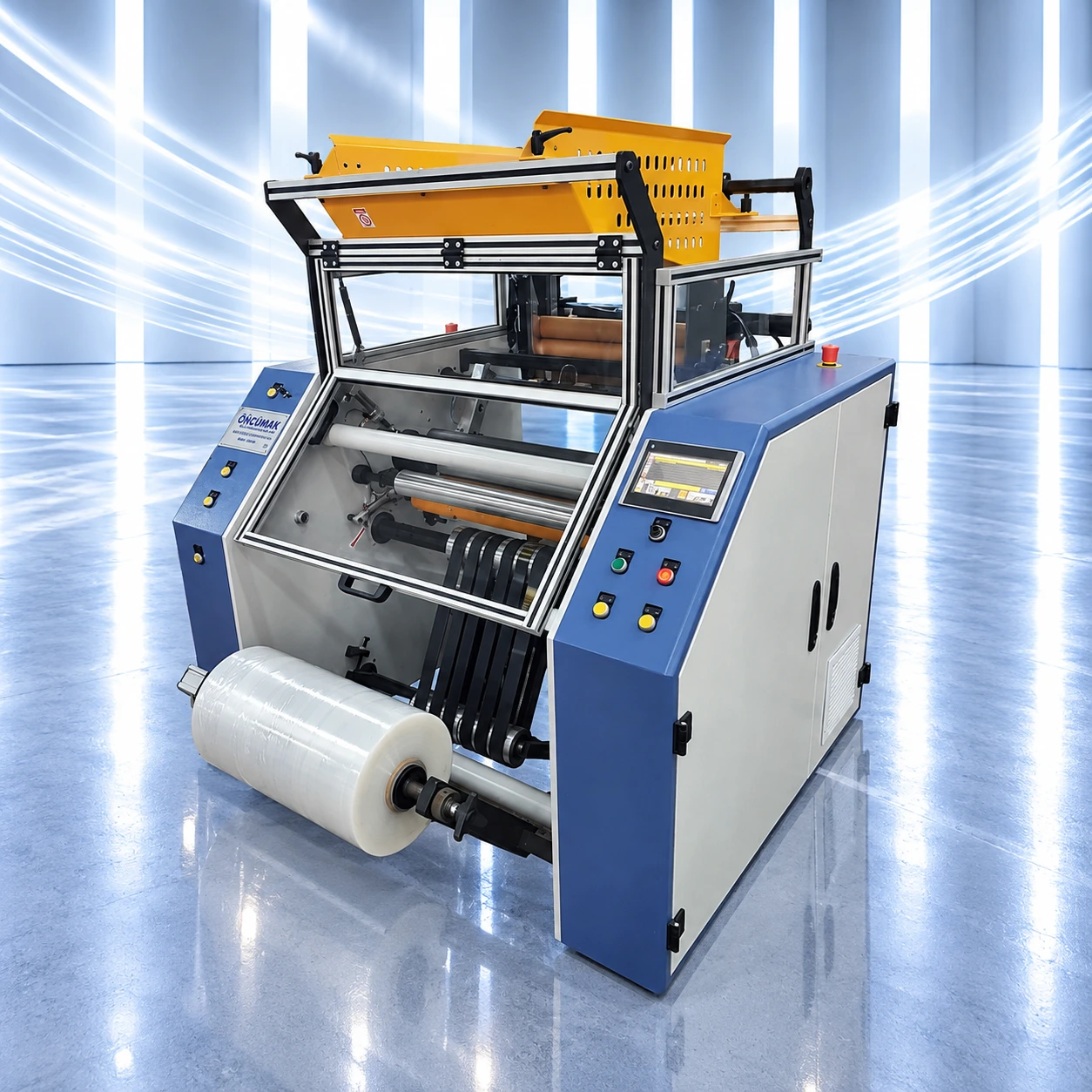
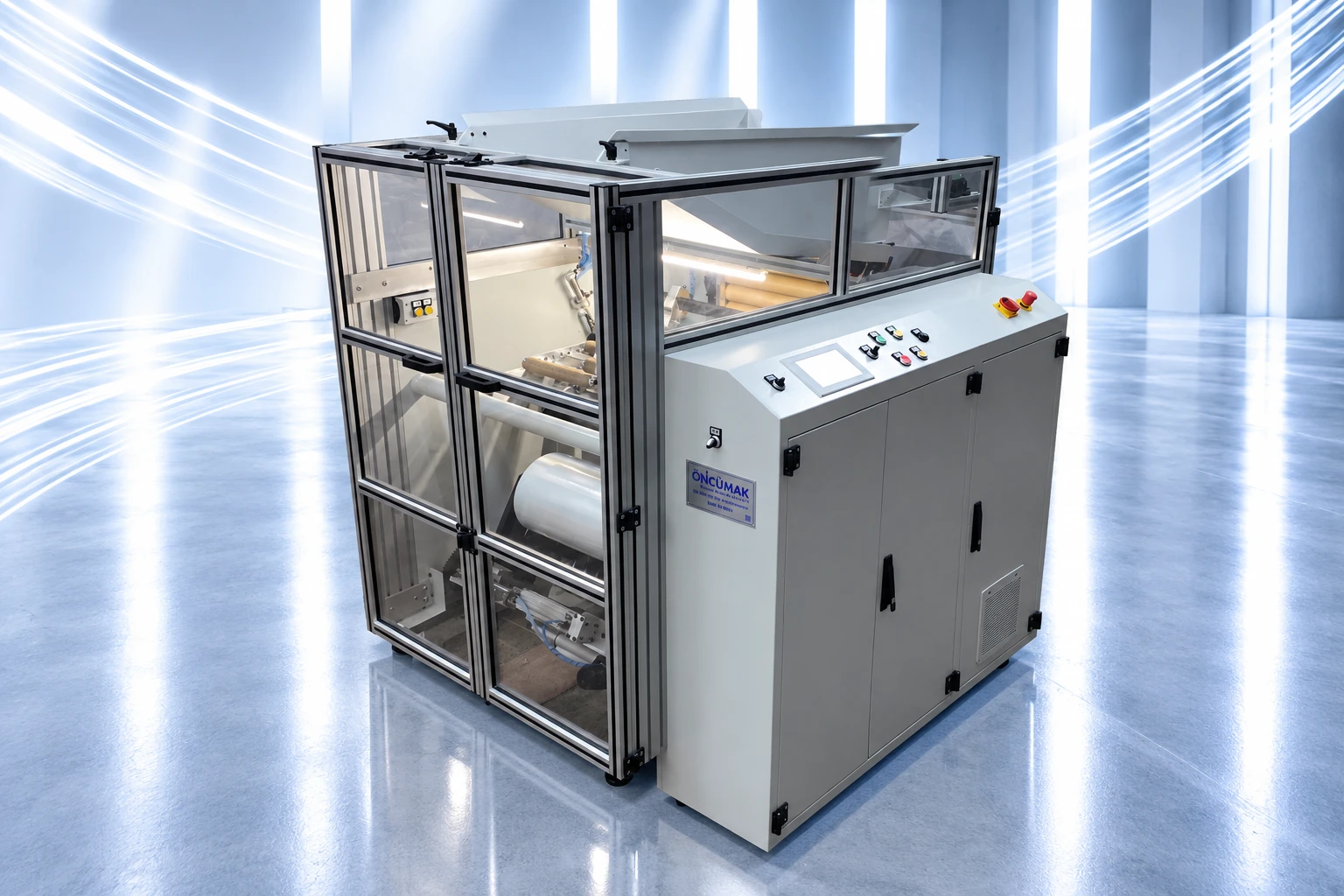
How a rewinding machine works
- The jumbo roll is loaded onto the unwind shaft.
- The film runs over a series of rollers while its tension is controlled.
- An empty core is placed in position and the film is caught on it; a static charger helps the film grip the core quickly and reliably.
- The roll is wound to the set length, the film is cut, the finished roll is ejected and the cycle starts again.
On a fully automatic machine, core feeding, cutting and roll changes happen without stopping the line. At 1210 mt/min, the SR-1500 produces three 200 m rolls per minute.
Types of rewinding machines
| Type | What it does | Öncümak model |
|---|---|---|
| Conventional rewinding | Rewinds jumbo rolls into hand, machine and PVC cling film rolls | SR-1500 |
| Rewinding and slitting | Rewinds the same films as the SR-1500, PVC cling film included, with optional slitting into 2–10 equal rolls (down to 50 mm) | SM-1300 L, SM-1300 2S, SM-1300 2S PRO |
| Pre-stretch rewinding | Pre-stretches the film by up to 500% while rewinding | SP-1400 |
| Coreless rewinding | Winds rolls without a paper core, so the whole roll is film; can also slit a jumbo roll into 2 coreless rolls | CR-1700 |
Rewinding vs slitting
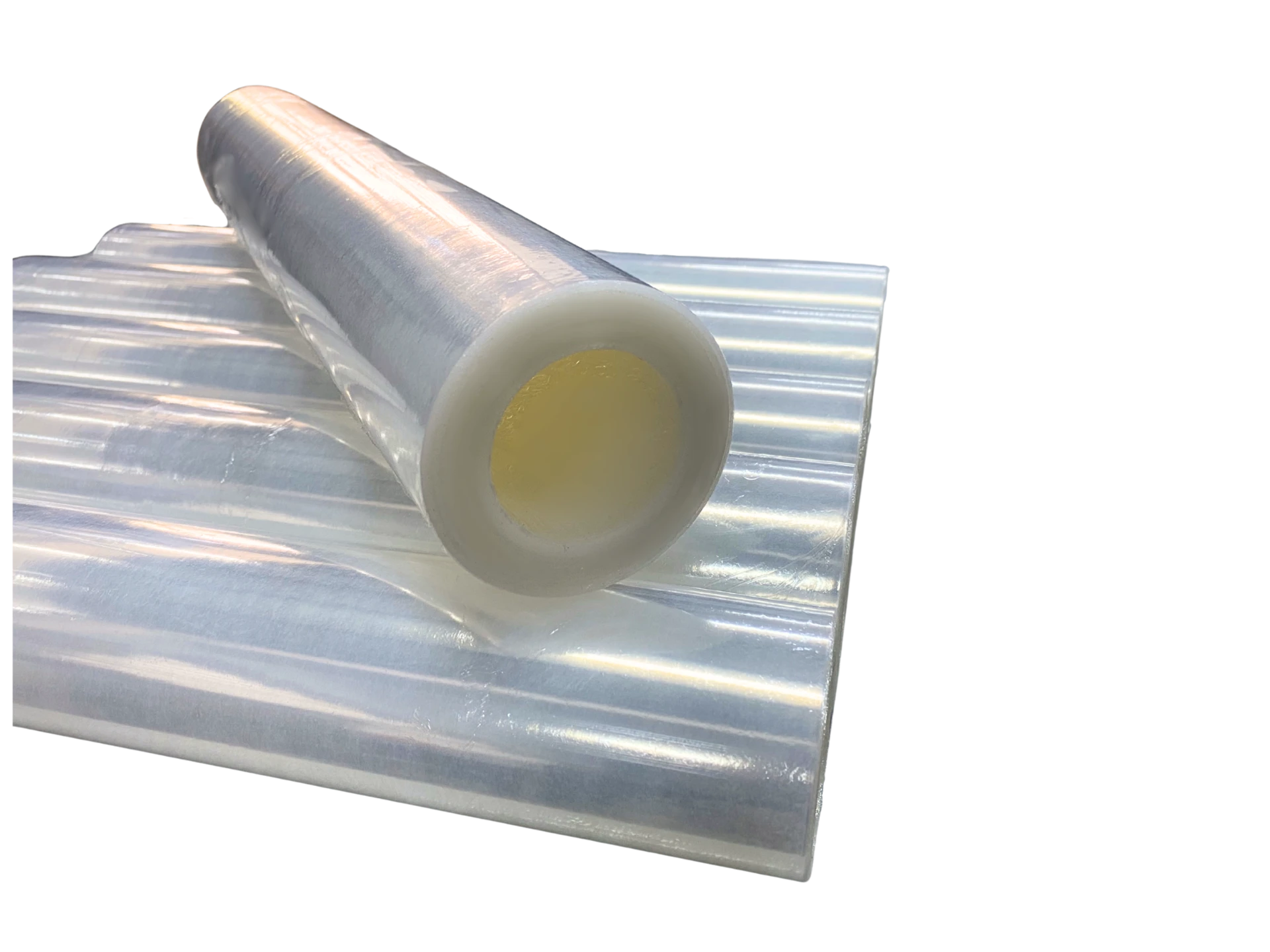
Rewinding keeps the film's width and changes the roll: its length, weight and core. Slitting cuts the film into narrower widths during rewinding. Slitting is optional on every SM-1300 model, so the same machine can also rewind at full width. Divided into 2, a 50 cm jumbo roll gives two 25 cm rolls; into 3, three rolls of about 16.6 cm; into 4, four 12.5 cm rolls; and so on up to ten 5 cm rolls, each on its own core, in a single pass. The coreless CR-1700 divides a jumbo roll into two equal coreless rolls.
What matters when comparing machines
- Speed and automation: how many finished rolls per shift, and how much the operator has to do.
- Tension control: servo-driven unwinding and rewinding keep the film even and make different jumbo rolls easier to run.
- Core sizes: 38, 50 and 76 mm are the common core diameters. Cores are bought ready-cut to the roll width from a core supplier; the rewinding machine does not cut them.
- Jumbo roll size and weight: the machine must accept the jumbo rolls you can buy.
- Film thickness range: Öncümak's range handles 8–35 µm film.
- After-sales support: installation, training and spare parts.
A step-by-step guide is in how to choose a stretch film rewinding machine.
Related machines
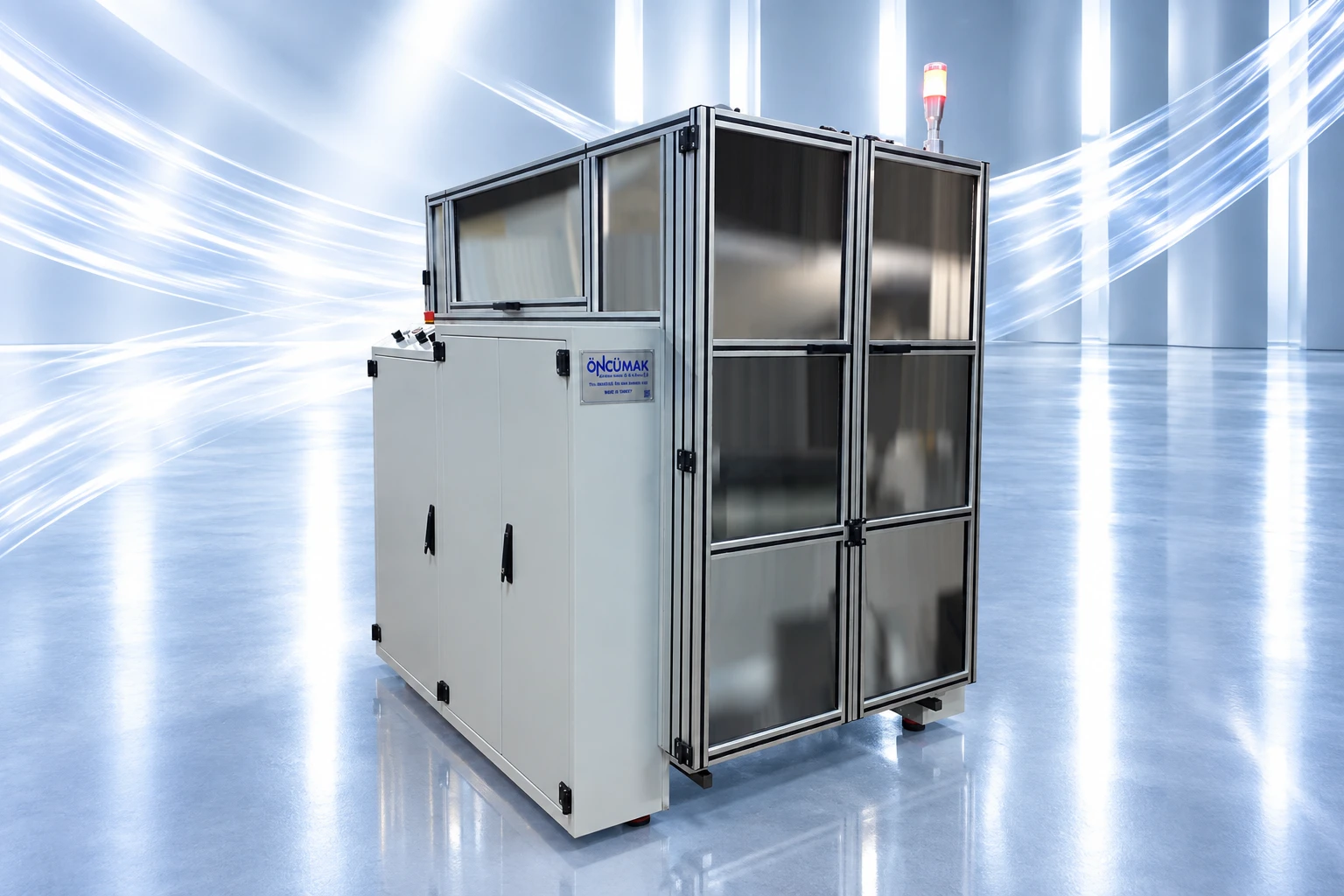
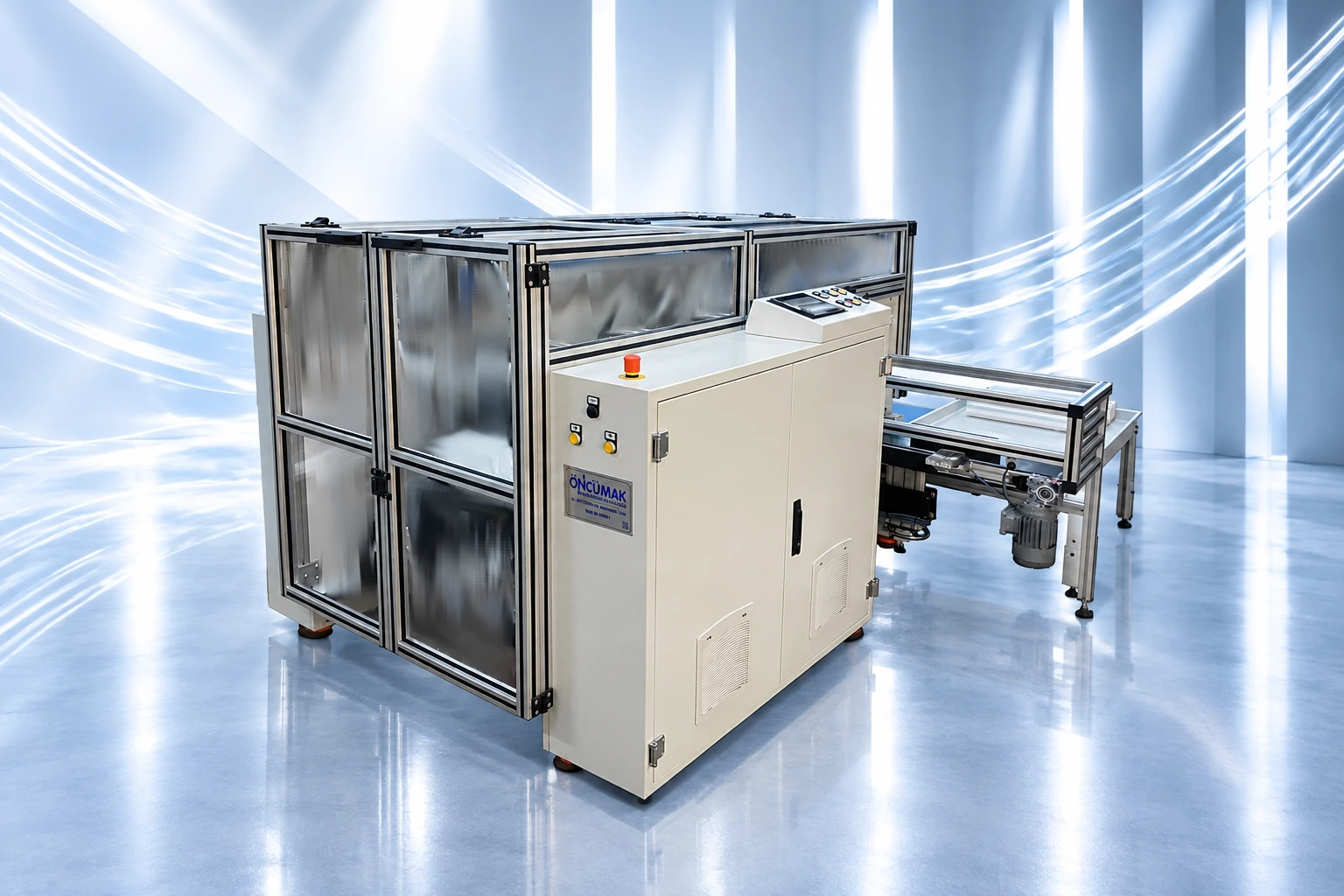
- Stretch film rewinding machine vs stretch wrapping machineA stretch film rewinding machine makes rolls of stretch film; a stretch wrapping machine uses those rolls to wrap pallets. They sit at different points of the same chain: film production, then rewinding into sellable rolls, then wrapping at the end user.
- Semi-automatic vs fully automatic stretch film rewinding machinesA semi-automatic rewinder winds the film by itself, but at every roll change an operator has to cut the film, take off the finished roll and fit a new core. A fully automatic rewinder does all of that on its own, without stopping. The difference shows in output per shift, labour, roll consistency and price.